One Perfect Bite: How Dubai's Ultra-Luxury Confectioners Mastered the Art of Intentional Restraint
There is a particular kind of silence that follows a genuinely extraordinary dessert. Not the silence of wanting more, but the quieter, more complete stillness of having received exactly enough. In Dubai's most rarefied confectionery circles, that silence is not accidental. It is engineered with the same precision applied to the ingredients themselves, to the gilding, to the presentation. It is, in every sense, the point.
For years, American luxury dessert culture has operated under a different assumption — that abundance signals value. The towering cake, the overflowing sundae, the tasting menu that concludes with four consecutive sweets: these have long served as shorthand for generosity, for celebration, for the idea that more is inherently better. Dubai's elite confectioners have never subscribed to that philosophy. And increasingly, neither do the most discerning American consumers.
The Psychology of the Deliberate Portion
To understand why smaller servings can feel more luxurious than generous ones, it helps to consider what happens in the mind during the act of eating. Sensory pleasure, as any neuroscientist will confirm, is subject to the law of diminishing returns. The first bite of a well-made chocolate truffle activates the brain's reward pathways with remarkable intensity. By the fourth or fifth, the response has already begun to dull. The palate, like any finely tuned instrument, requires rest between performances.
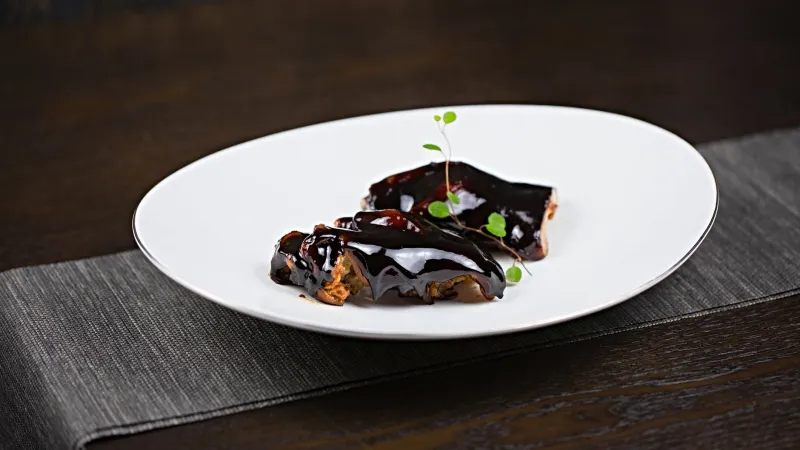
Dubai's premium confectionery houses have long understood this dynamic intuitively. At the most exclusive establishments along Sheikh Zayed Road and within the private dining rooms of the city's landmark hotels, a single confection might arrive on a hand-polished stone slab, accompanied by nothing more than a small vessel of warm, spiced tea. The presentation communicates something important before a single bite is taken: this is an experience worthy of your full attention.
The portion is not small because the confectioner is being frugal. It is small because the confectioner respects the integrity of the experience — and, implicitly, the intelligence of the guest.
From Excess to Exactitude
The cultural shift now unfolding in American luxury dessert spaces mirrors a broader movement toward intentionality that has reshaped categories from wine to fragrance to fashion. Just as the most coveted perfumes have moved away from projection-heavy formulas in favor of intimate, skin-close sillage, and just as the most celebrated sommeliers now champion restrained, terroir-driven pours over extracted blockbusters, the finest dessert artisans are discovering that precision trumps volume.
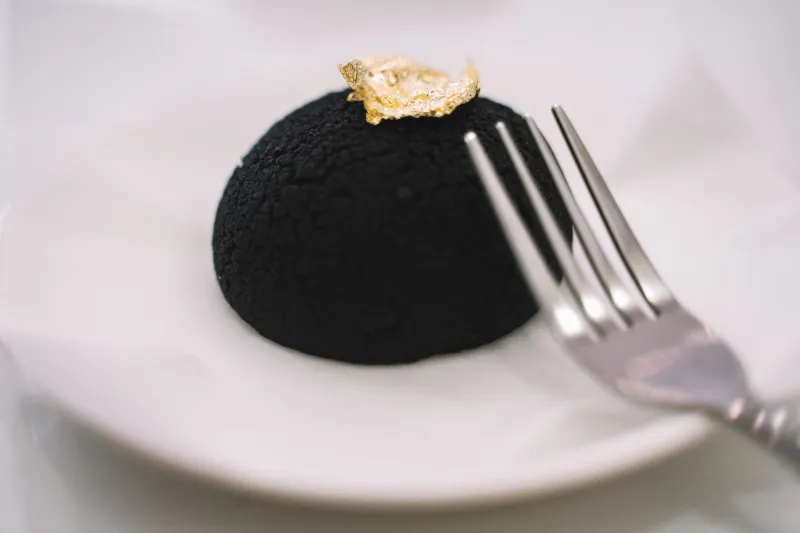
This is not austerity. It is something more sophisticated: the recognition that every element of a luxury experience must justify its presence. A confection built around a single Medjool date, hand-filled with saffron-infused mascarpone and finished with a whisper of edible 24-karat gold leaf, does not benefit from being served alongside three companion pieces. It benefits from standing alone — from being the sole object of attention in the moment it is consumed.
Several American pastry chefs working in the Dubai-inspired luxury space have begun adopting this philosophy with notable results. At high-end tasting experiences in cities like New York, Los Angeles, and Chicago, dessert courses are increasingly being reimagined not as conclusions to a meal but as singular, meditative moments — one confection, presented with intention, followed by nothing except the expectation that the guest will sit with the experience for a moment before reaching for conversation or the check.
What Restraint Communicates About Value
There is an interesting paradox at the heart of the intentional-portion movement. Charging a premium price for a single, small confection requires enormous confidence — in the product, in the craft, and in the consumer's capacity to understand what they are being offered. It is, in many ways, a more vulnerable commercial proposition than simply piling a plate high and letting volume do the convincing.
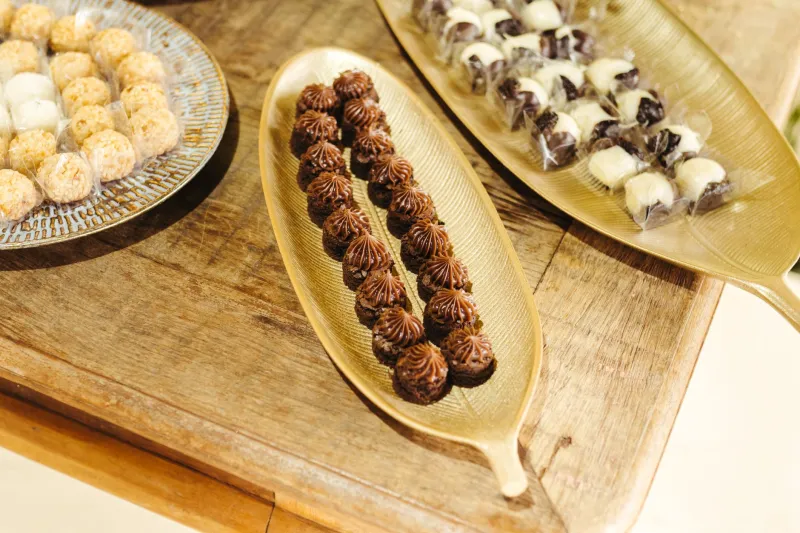
Dubai's luxury confectioners have always operated in this space of confident restraint. The city's culture of ultra-premium gifting — where a single box of artisan chocolates might carry a price tag that rivals a fine bottle of Burgundy — has cultivated a consumer base that equates scarcity with desirability and deliberateness with respect. A box containing six flawless pieces, each a distinct flavor narrative inspired by the spice routes of the Arabian Peninsula, communicates far more about the maker's mastery than a box containing twenty mediocre ones.
American luxury consumers, long accustomed to equating quantity with quality, are arriving at this understanding through a combination of cultural exposure and evolving taste. The rise of Dubai-inspired confectionery in premium American retail — from specialty boutiques to the gifting departments of high-end department stores — has accelerated the education. Consumers who might once have questioned the proportions are increasingly the ones who champion them.
The Single Bite as Complete Narrative
Perhaps the most compelling argument for the intentional portion is a purely sensory one. When a confection is designed to be consumed in a single, considered bite — when its architecture, its flavor progression, and its textural contrasts are all calibrated for that singular moment of consumption — it can achieve a complexity that a larger serving simply cannot sustain.
Consider the construction of a classic Dubai-inspired layered chocolate bonbon: a shell of dark, single-origin couverture giving way to a layer of rose-water ganache, then a thread of date caramel, then the faintest dusting of ground cardamom at the center. That entire narrative unfolds in three to four seconds of eating. Served as part of a larger dessert, those flavors would compete with accompaniments, with the weight of prior courses, with the distraction of abundance. Served alone, in silence, they tell a complete story.
This is the genius of the intentional portion: it does not ask the guest to consume less. It asks the guest to experience more.
The American Appetite, Refined
The broader American dessert landscape still has ground to cover before the philosophy of the single, perfect bite becomes mainstream. But in the luxury segment — among the consumers who seek out Dubai-inspired confections precisely because they represent a different set of values than the conventional American sweet — the shift is already well underway.
What Dubai's finest confectioners have always known, and what their American counterparts are learning, is that satiation achieved through intention is more enduring than satiation achieved through volume. The guest who leaves having consumed one extraordinary thing carries that experience differently than the guest who leaves having consumed many adequate ones.
True opulence, as Sweet Dubai has long maintained, is never about how much. It is always, and only, about how well.