The Art of the Hidden: How Dubai's Elite Confectioners Teach Luxury to Speak in Whispers
There is a particular kind of confidence that requires no performance. It does not reach for the spotlight, does not stack its credentials on the counter for inspection. It simply exists—assured, complete, and entirely at ease with being understood only by those who know precisely what to look for. This, it turns out, is the governing philosophy behind one of the most compelling movements to emerge from Dubai's rarefied confectionery world: the deliberate concealment of luxury.
In an era when edible gold leaf and jewel-bright garnishes have become the visual shorthand for premium indulgence, a cohort of Dubai's most accomplished pastry minds is moving in the opposite direction entirely. They are hiding their most expensive ingredients. Not out of economy, and certainly not out of carelessness—but out of a deeply considered conviction that true sophistication is experienced rather than displayed.
The Philosophy of Deliberate Obscurity
To understand this movement, one must first appreciate the cultural sensibility from which it springs. Dubai's relationship with luxury has always been more nuanced than its skyline might suggest. Alongside the grand gestures and architectural superlatives exists a tradition of private excellence—majlis hospitality that reserves its finest offerings for those who linger long enough to receive them, souks where the most extraordinary goods are kept behind unassuming facades, and a culinary culture in which the highest compliment is not spectacle but depth.
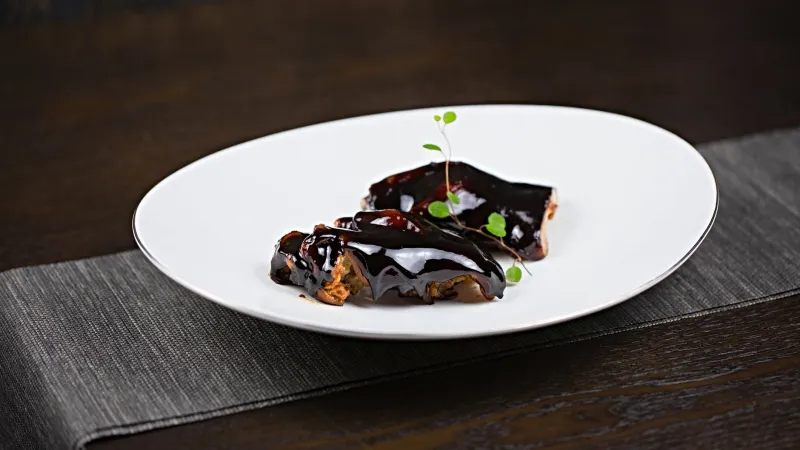
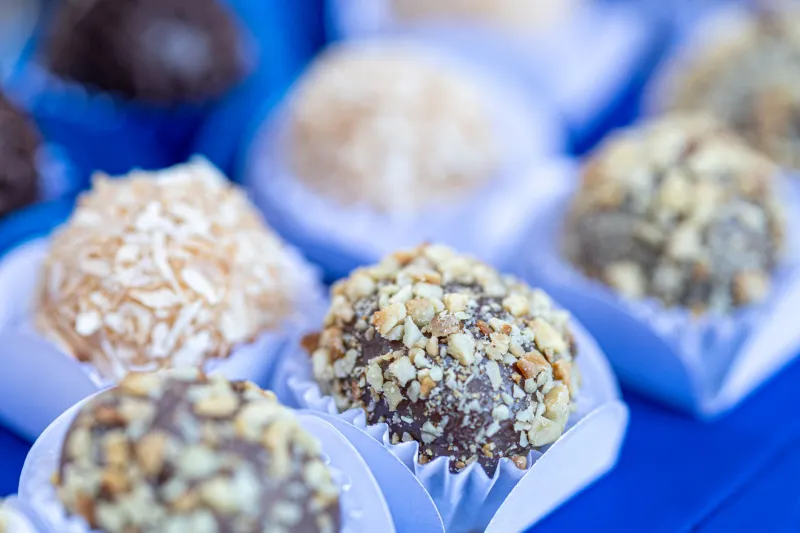
It is within this tradition that a new generation of Dubai confectioners has found its footing. Rather than signaling premium quality through visible cues—lustrous finishes, dramatic presentations, ingredients announced by name on elaborate menu cards—these artisans are encoding luxury into the flavor itself. A ganache that reads, at first glance, as a simple chocolate truffle may contain single-origin Madagascan cacao selected for a specific fermentation profile. A pale, unadorned cream may carry within it a quantity of saffron that would make a sommelier pause. The ingredient is there. It is simply not performing.
Single-Origin Cacao and the Art of Misdirection
Perhaps nowhere is this philosophy more elegantly executed than in the treatment of premium cacao. In many luxury contexts, single-origin chocolate is a talking point—its provenance announced, its tasting notes recited like a wine list. Dubai's most experimental chocolatiers are doing something far more subversive: pairing extraordinary cacao with flavor combinations that seem, on the surface, to belong to an entirely different conversation.
Consider the practice of nesting a high-percentage, 72% Peruvian cacao within a ganache that leads with the brightness of dried lemon and a faint trail of white pepper. The chocolate is not hidden in the sense of being disguised; it is present, unmistakable to the educated palate. But it does not introduce itself. Instead, it arrives gradually, a warm bass note beneath the citrus treble, revealing its complexity only to those who slow down long enough to receive it. For the uninitiated, it is a pleasant confection. For the knowing, it is a conversation.
This approach demands an unusual kind of trust from the maker—a willingness to let the ingredient carry the experience without the safety net of visual or verbal cues.
Rare Spices in Neutral Tones
The concealment of rare spices within neutral-toned preparations represents another dimension of this philosophy. Where a lesser hand might reach for the drama of a deep crimson saffron ganache or a visually arresting turmeric glaze, Dubai's more quietly ambitious confectioners are folding these same ingredients into preparations that offer no visual hint of their contents.
An ivory-colored panna cotta, smooth and seemingly austere, may carry an infusion of aged Omani frankincense that took days to prepare. A pale caramel, unremarkable in appearance, might conceal a quantity of hand-ground loomi—the dried black lime that is a cornerstone of Gulf cooking—lending the confection an extraordinary, low-frequency tartness that reveals itself only on the finish.
The effect is disorienting in the best possible way. The eye, accustomed to reading luxury through visual cues, is given nothing to work with. The palate must do all the work. And in doing that work, the taster becomes an active participant rather than a passive observer—discovering, rather than being told.
America's Most Thoughtful Confectioners Are Listening
This philosophy is beginning to find a receptive audience among American dessert makers who have grown restless with the prevailing grammar of luxury. In cities like New York, San Francisco, and Chicago—markets where food culture is both highly developed and perpetually self-critical—a small but influential group of pastry professionals is experimenting with what might be called earned complexity: the idea that the best ingredients should be discovered, not declared.
For American consumers, this represents a genuine shift in expectation. The domestic luxury dessert market has, for the better part of a decade, operated on the premise that premium quality must be legible at a glance. Price points are justified through visible markers: the gold leaf, the branded packaging, the conspicuous provenance label. But a growing segment of American dessert lovers—those who have traveled, who read seriously about food, who approach the table with genuine curiosity—are beginning to find this transparency not reassuring but limiting. They are hungry, in the most literal sense, for something that rewards their attention.
The Dubai model offers precisely that. It asks the taster to bring something to the experience: knowledge, patience, a willingness to be surprised. And in return, it offers something that no amount of gilding can provide—the private pleasure of recognition.
The Marker of True Sophistication
There is a useful distinction to be drawn here between secrecy and restraint. Dubai's hidden-luxury confectioners are not being coy. They are not withholding information as a power play or manufacturing mystery for its own sake. The ingredients are real, the quality is genuine, and for those with the palate to perceive it, the experience is entirely transparent.
What they are resisting is the conflation of luxury with legibility—the assumption that a thing is only valuable if it can be immediately identified and categorized. In their view, the truest marker of sophistication is not the ability to recognize a gold leaf garnish. It is the ability to taste a single, unremarkable-looking chocolate and know, without being told, that the cacao within it was harvested from a single estate in the Peruvian highlands and processed with uncommon care.
To know what you are tasting, rather than what you are seeing—this is the ambition that Dubai's most thoughtful confectioners have set before themselves. And as that ambition begins to take root in the American luxury dessert imagination, it carries with it a quiet but profound invitation: to pay closer attention, to trust the palate over the eye, and to find in that trust a more lasting and more personal form of pleasure.
Luxury, it turns out, has always been most powerful when it whispers.