When Less Demands More: The Uncompromising Ingredient Standards Behind Dubai's Minimalist Confectionery
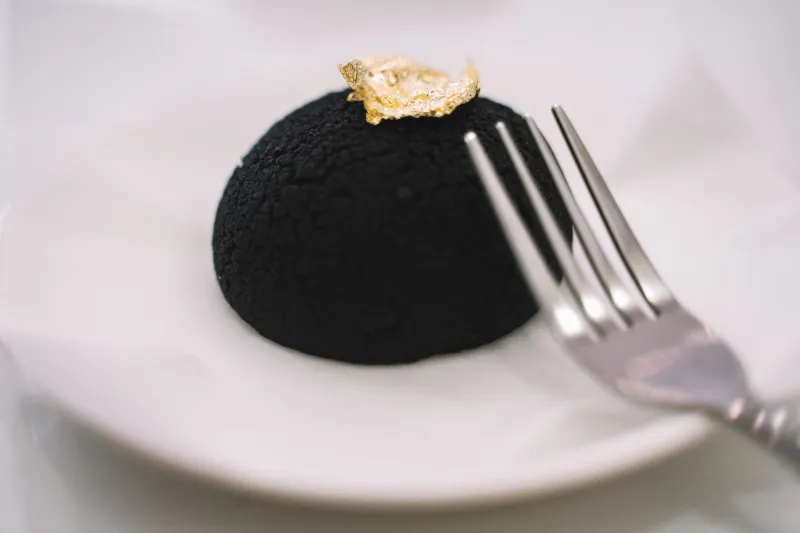
There is a particular kind of confidence required to place a single, pale disc of cream upon a plate and call it a statement. No gilded flourishes, no architectural sugar work, no cascade of micro-herbs arranged with theatrical precision. Just the cream—and the absolute certainty that the cream itself is extraordinary.
This is the philosophy that animates Dubai's most quietly influential confectionery culture. In a city so frequently associated with spectacle, the most sophisticated dessert experiences have moved in the opposite direction: toward stillness, toward purity, toward an almost severe commitment to the integrity of each individual ingredient. And increasingly, that philosophy is crossing the Atlantic, finding a receptive audience among American pastry chefs who have grown weary of complexity for its own sake.
The Logic of Minimalism in a Maximalist City
It may seem paradoxical that Dubai—a metropolis that gave the world seven-star hotels and gold-leaf everything—would become a crucible for minimalist dessert culture. Yet the paradox resolves itself upon closer examination. True luxury, as Dubai's most discerning residents and visitors have long understood, is not about accumulation. It is about the confidence to present something singular and to trust that its quality will speak without assistance.
In the emirate's most exclusive private dining rooms and boutique confectionery houses, this principle manifests as an almost forensic approach to sourcing. A ganache built from a single-estate Madagascan cocoa variety does not require embellishment. A panna cotta set with a precise bloom of hand-harvested agar and perfumed with genuine Taif rose water does not need a garnish. The ingredient is the luxury. Everything else is noise.
This philosophy places an extraordinary burden on the raw materials themselves—and that burden, pastry professionals are discovering, is one of the most clarifying forces in the craft.
The American Adoption of Dubai's Exacting Standard
For American confectioners trained in an era of elaborate plating and multi-component desserts, embracing this standard requires both a philosophical shift and a logistical one. Sourcing ingredients to the level that minimalism demands is neither straightforward nor inexpensive.
Nadia Osei, a pastry chef based in New York who spent two years working in a luxury hotel in Dubai, describes the transition as "a kind of productive humbling." Speaking with Sweet Dubai, she recalled her first week in the emirate's kitchen: "I kept wanting to add things—a tuile, a sauce, a second flavor. My chef pulled me aside and said, 'You are adding because you do not yet trust the ingredient. Find better ingredients and you will stop needing to add.' That changed everything for me."
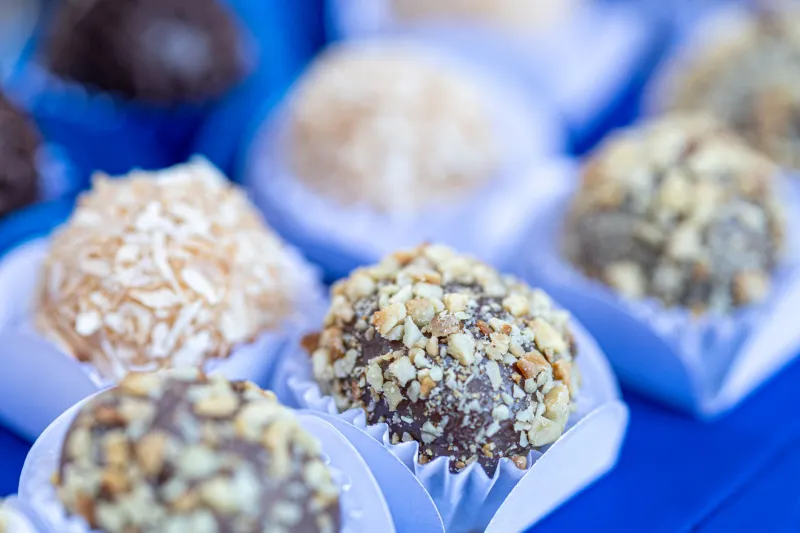
Osei now sources single-origin vanilla from a small cooperative in Tahiti, working directly with the grower to select pods harvested at peak maturity. She uses heirloom cocoa varieties—specifically a Porcelana criollo from Venezuela—for her bon bons, a bean so delicate and nuanced that she describes it as "almost floral, with none of the bitterness most people associate with dark chocolate." Her current menu features no more than four components per dessert. Each one, she insists, must be irreplaceable.
Single-Origin, Heirloom, and Rare: The New Vocabulary of Purity
The language of ingredient sourcing has evolved considerably in American fine dining over the past decade, but the Dubai-influenced minimalist approach elevates that vocabulary to a new register. Terms like single-origin and heirloom are no longer merely marketing distinctions—they become ethical and aesthetic imperatives when a dessert has nowhere to hide.
Marco Delacroix, a Chicago-based chocolatier who has studied confectionery traditions across the Gulf region, makes this point with characteristic directness: "When you are making a five-component chocolate dessert, you can compensate for a mediocre cocoa with technique. When you are making a two-component one, you cannot. The bean has to be right. The process has to be right. There is no rescue operation available."
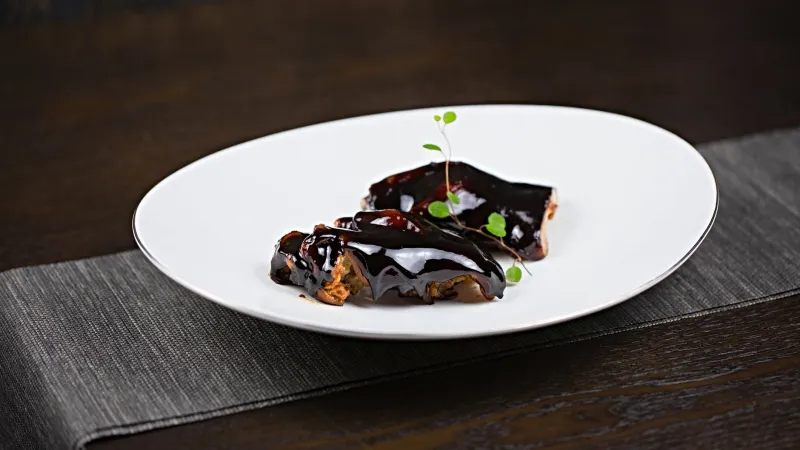
Delacroix currently works with three cocoa estates, each selected for a specific flavor profile suited to particular preparations. For a current signature—a dark chocolate cremeux served with nothing more than a whisper of smoked salt—he uses a single-origin Peruvian Chuncho variety, prized for its complexity and natural fruit notes. The salt, sourced from a small artisan producer in Maine, is applied with what he describes as "almost surgical" restraint: enough to elevate, never enough to intrude.
Floral essences present a similar challenge. Genuine orange blossom water, distilled from fresh neroli blossoms rather than synthesized in a laboratory, carries a fragrance of extraordinary delicacy that no artificial substitute can replicate. Rose water sourced from the Taif region of Saudi Arabia—long revered across the Arabian Peninsula and used extensively in Emirati confectionery—possesses a depth and roundness that mass-produced alternatives cannot approach. For minimalist desserts in which a single floral note may constitute an entire flavor profile, the difference is not subtle. It is decisive.
Purity as a Form of Respect
There is a cultural dimension to this philosophy that American practitioners have found both instructive and moving. In Emirati culinary tradition, the quality of an ingredient offered to a guest is understood as a direct expression of the host's esteem. To serve something adulterated or inferior—even if disguised by elaborate preparation—would be a form of discourtesy. Generosity, in this tradition, is measured not by quantity but by quality.
This framing resonates with a growing segment of American luxury consumers who have come to regard ingredient purity as a marker of genuine care. In an era of widespread skepticism about food systems and supply chains, the ability to trace a vanilla bean to a specific farm, or to verify that a saffron thread was hand-harvested in a particular Iranian province, carries a weight that no amount of decorative complexity can replicate.
"People are hungry for authenticity," says Osei. "Not the word—the actual thing. When you can tell someone exactly where every element of their dessert came from and why you chose it, that is a luxury experience. That is what Dubai taught me to understand."
The Discipline That Demands the Most
Minimalism, it bears noting, is among the most technically demanding approaches a confectioner can adopt. A ganache that contains only two ingredients—cream and chocolate—will reveal every imprecision in temperature, timing, and emulsification. A vanilla cream with no textural counterpoint will expose the slightest imbalance in sweetness or fat content. There is, as Delacroix puts it, "nowhere to hide and nothing to hide behind."
This is, paradoxically, why the philosophy is gaining traction among America's most accomplished pastry professionals rather than its least experienced. The confidence to strip a dessert down to its essential elements—and to trust that those elements, sourced and prepared with absolute integrity, will be sufficient—is the confidence that comes only from mastery.
Dubai's minimalist confectionery culture did not emerge from an absence of skill. It emerged from an excess of it. And as that culture finds its footing in American kitchens, it is asking the same question of every pastry chef willing to listen: not what can I add, but what does this ingredient, at its finest, truly need?
The answer, more often than not, is very little. And that very little must be perfect.