The Art of Less: How Dubai's Culture of Quiet Luxury Is Transforming the American Dessert Imagination
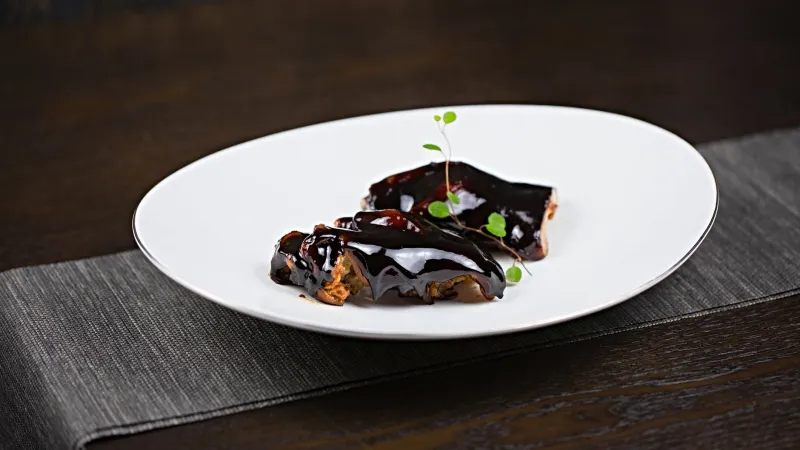
There is a particular kind of confidence required to place a single, unadorned chocolate on a white porcelain plate and ask a guest to consider it the finest thing they will taste all evening. No gold leaf. No architectural sugar work. No theatrical smoke. Just the chocolate, the plate, and the silence between them.
This is the new language of luxury in Dubai—and it is being spoken with increasing fluency in the most discerning corners of the American confectionery world.
The Psychology of Restraint
For decades, the dominant visual grammar of high-end American desserts borrowed heavily from the maximalist tradition: towering croquembouches, lava cakes erupting in photogenic fashion, chocolate fountains at galas that once signaled arrival and abundance. Opulence, in the popular imagination, was synonymous with volume. More meant more.
But luxury psychology has always been more complicated than that. Researchers studying consumer behavior have long noted what might be called the inconspicuous consumption phenomenon—the tendency among ultra-high-net-worth individuals to gravitate away from overt display as their financial security deepens. When abundance is guaranteed, the performance of abundance becomes unnecessary. What replaces it is refinement: the capacity to detect nuance, to appreciate subtlety, to find pleasure in what others might overlook entirely.
Dubai's most sophisticated dessert culture has internalized this principle with remarkable elegance. In the emirate's private dining rooms and members-only establishments, the dessert course has become a study in editorial precision. Negative space on the plate is not emptiness—it is intention. A whisper-quiet flavor profile built around a single, perfectly sourced ingredient is not restraint born of scarcity. It is restraint born of absolute confidence.
Single-Origin Chocolate and the New Prestige Ingredient
Nothing encapsulates this philosophy more completely than the rise of single-origin chocolate within Dubai's luxury confectionery circles. Where once a dessert might have been judged by the complexity of its construction, it is now increasingly evaluated by the provenance and purity of its central ingredient.
Single-origin chocolate—sourced from a specific farm, region, or cooperative, with flavor notes as distinct and traceable as a fine Burgundy—has become the ingredient of choice for confectioners who understand that their clientele no longer needs to be impressed. They need to be educated, transported, and trusted.
For American luxury consumers, this represents a meaningful cultural recalibration. The craft chocolate movement has been quietly gaining momentum across cities like New York, San Francisco, and Chicago for the better part of a decade, but it has often remained the province of niche enthusiasts rather than mainstream luxury culture. Dubai's embrace of single-origin chocolate as a prestige marker—rather than a subcultural curiosity—lends the ingredient a new kind of aspirational authority that American audiences are primed to receive.
Negative Space as a Design Philosophy
The visual language of minimalist dessert presentation deserves its own consideration, because it operates on principles that are genuinely counterintuitive to the American dining experience.
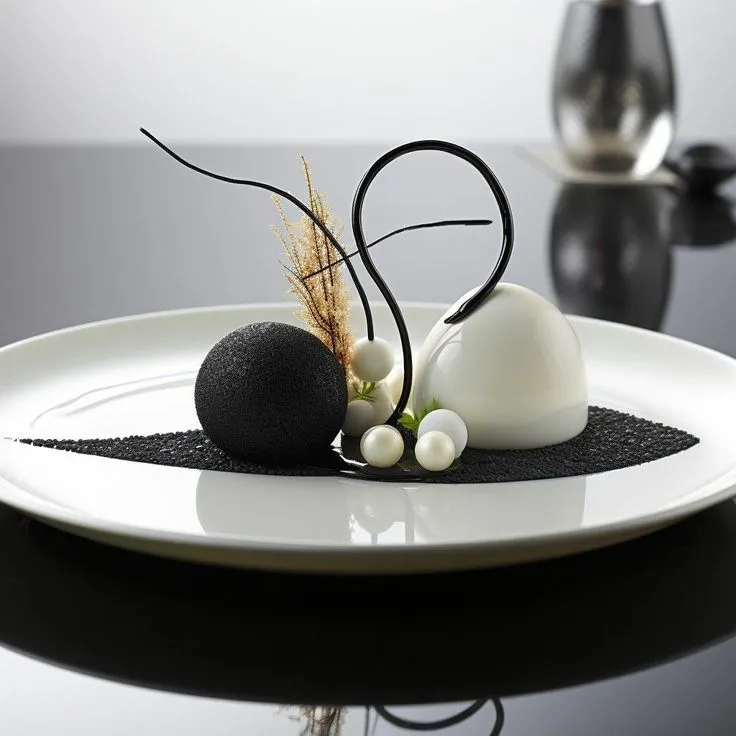
In a culture where the phrase value for money carries enormous psychological weight, a plate that is mostly empty can feel, at first encounter, like a provocation. But this is precisely the point. The deliberate use of negative space in dessert plating is a gesture of trust—trust that the diner is sophisticated enough to focus on what is present rather than what is absent, to understand that the composition has been arrived at through rigorous editing rather than careless omission.
Dubai's finest pastry kitchens have mastered this grammar with particular authority. A single quenelle of saffron-infused cream resting against a thin line of reduced date syrup, surrounded by the quiet geometry of an unadorned plate, communicates volumes about the establishment's confidence in its own standards. It says: we do not need to distract you. We need only to deliver.
American fine dining is beginning to absorb this lesson, and its arrival in the dessert course feels particularly significant. The appetizer and entrée have long been comfortable with minimalist plating; the dessert has often been granted a kind of theatrical exemption. That exemption is now being quietly revoked in the country's most forward-thinking establishments.
Whisper-Quiet Flavor Profiles and the Educated Palate
Perhaps the most demanding aspect of Dubai's minimalist dessert philosophy is its insistence on flavor profiles that reward attention rather than overwhelm it. The maximalist tradition relied, in part, on intensity—bold sweetness, dramatic bitterness, flavors that announced themselves immediately and left little room for interpretation. The minimalist tradition asks something different of both the confectioner and the diner.
A dessert built around the delicate floral quality of orange blossom water, or the dry, almost saline finish of a high-percentage single-origin dark chocolate, or the barely-there warmth of white cardamom requires the diner to slow down, to pay attention, to bring something of themselves to the experience. It is, in this sense, a deeply collaborative form of pleasure—one that flatters the palate rather than simply satisfying it.
This is the flavor philosophy that Dubai's most accomplished confectioners have been developing for years, drawing on a regional tradition that has always prized subtlety in sweetness. Arabian dessert culture, at its most refined, has never been about maximizing sugar content. It has been about the precise calibration of flavors that complement, complicate, and ultimately elevate one another.
For American luxury consumers who have spent years developing their palates through wine, specialty coffee, and artisanal cheese, this approach to confectionery feels like a natural extension of an existing sensibility. The market is ready. The question is whether American confectioners are willing to trust it.
Why This Moment Matters
The timing of this cultural shift is not incidental. American luxury consumers are navigating a broader renegotiation of what wealth looks and feels like—one in which the conspicuous display of the early 2000s has given way to something more considered, more private, and ultimately more assured. The quiet luxury aesthetic that has dominated fashion discourse over the past several years is finding its natural counterpart in the dessert world, and Dubai's influence is helping to shape its contours.
What Sweet Dubai has long understood is that the golden city's relationship with luxury has never been purely about spectacle. Beneath the famous skyline and the extraordinary architecture lies a culture of genuine connoisseurship—one that knows the difference between impressing a stranger and satisfying a sophisticated guest. It is this distinction that is now traveling across the Atlantic, finding its audience in American dining rooms and confectionery counters where the most powerful statement a dessert can make is a very quiet one.
The velvet paradox, as it might be called, is this: in a world saturated with stimulation, the most radical act of luxury is to offer less—and to mean every single element of it.