When Chanel No. 5 Meets Crème Brûlée: The Rise of Fragrance-House Confectionery in American Luxury
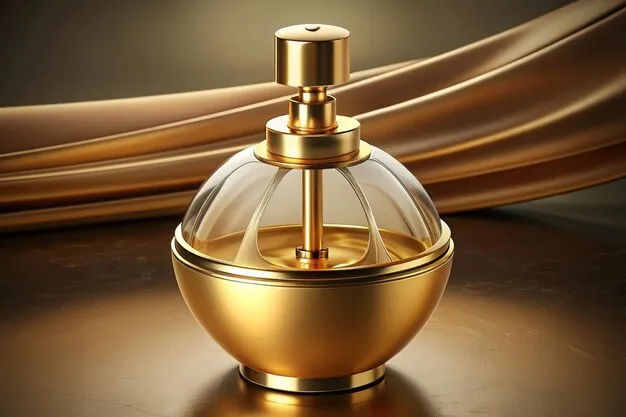
Photo: luxury perfume bottle next to elegant chocolate truffles gold background, via img.freepik.com
There is a moment, familiar to anyone who has ever uncapped a bottle of a great perfume, when the senses seem to suspend themselves in collective wonder. The fragrance lifts, the memory stirs, and something ineffable occurs at the intersection of scent and emotion. Now, imagine that same transcendent moment arriving not from a crystal flacon, but from a single, exquisitely crafted chocolate truffle placed upon the tongue.
This is no longer a hypothetical indulgence. Across the luxury market, the world's most celebrated fragrance maisons are making a decisive and deliberate entrance into the confectionery arts — and the reverberations are being felt from the boutiques of Beverly Hills to the tasting counters of New York's most discerning specialty retailers.
The Architecture of Scent and Taste
To understand why this crossover feels so inevitable, one must first appreciate the intimate biological relationship between smell and flavor. Neuroscientists have long established that the human experience of taste is, in large part, an olfactory event. Roughly eighty percent of what we perceive as flavor is delivered through retronasal olfaction — the process by which aromatic molecules travel from the mouth upward to the olfactory receptors. A fine perfumer and a master pastry chef, it turns out, are drawing from the same sensory vocabulary.
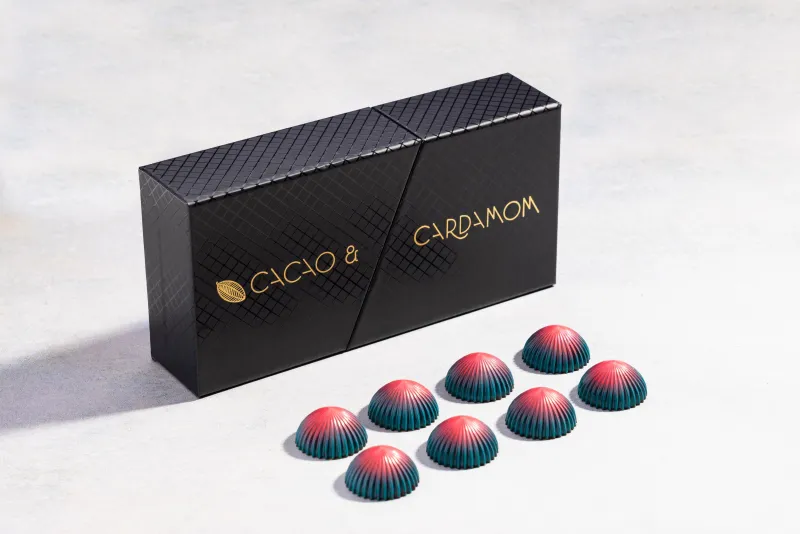
This shared language has not gone unnoticed by the executives and creative directors who steward luxury's most venerable names. Dior, whose fragrance portfolio spans everything from the powdery iris of Miss Dior to the smoky amber of Fahrenheit, has introduced limited-edition confectionery collections through its Café Dior concepts in select global markets — collections that mirror the olfactory architecture of the house's most iconic scents. Rose petals suspended in white chocolate ganache. Grasse jasmine distilled into a delicate pâte de fruit. Each piece is less a candy than a wearable fragrance made edible.
Hermès, with its characteristic restraint and wit, has approached the endeavor with equal sophistication, exploring citrus-forward confections that echo the luminous bergamot and pink pepper of its Eau des Merveilles line. The result is a product that does not merely taste of luxury — it conjures it, in the manner that only a great perfume can.
Dubai's Influence on the Multi-Sensory Movement
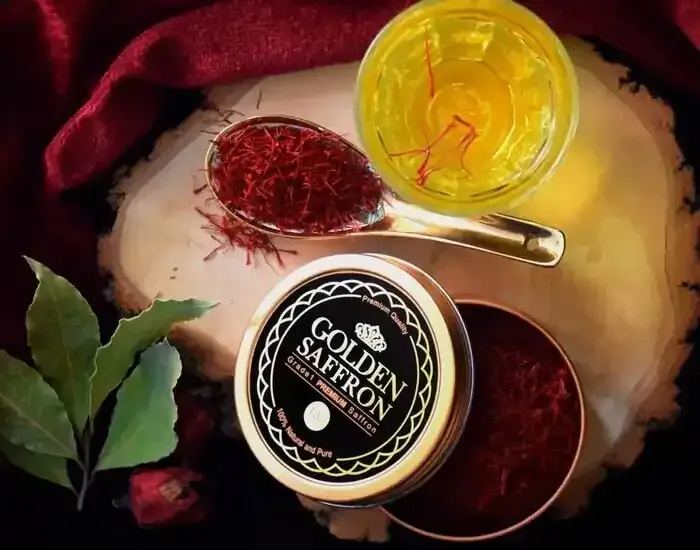
It would be impossible to examine this trend without acknowledging the cultural geography from which much of its inspiration flows. Dubai has long understood that true luxury is not a single-sense affair. In the souks and in the grand hotel lobbies of the emirate, oud incense mingles with the scent of rose water-drenched sweets; the golden shimmer of saffron-laced confections catches the eye even as their fragrance arrests the nose. The city has, for decades, practiced an instinctive form of multi-sensory hospitality that the Western luxury market is only now beginning to codify.
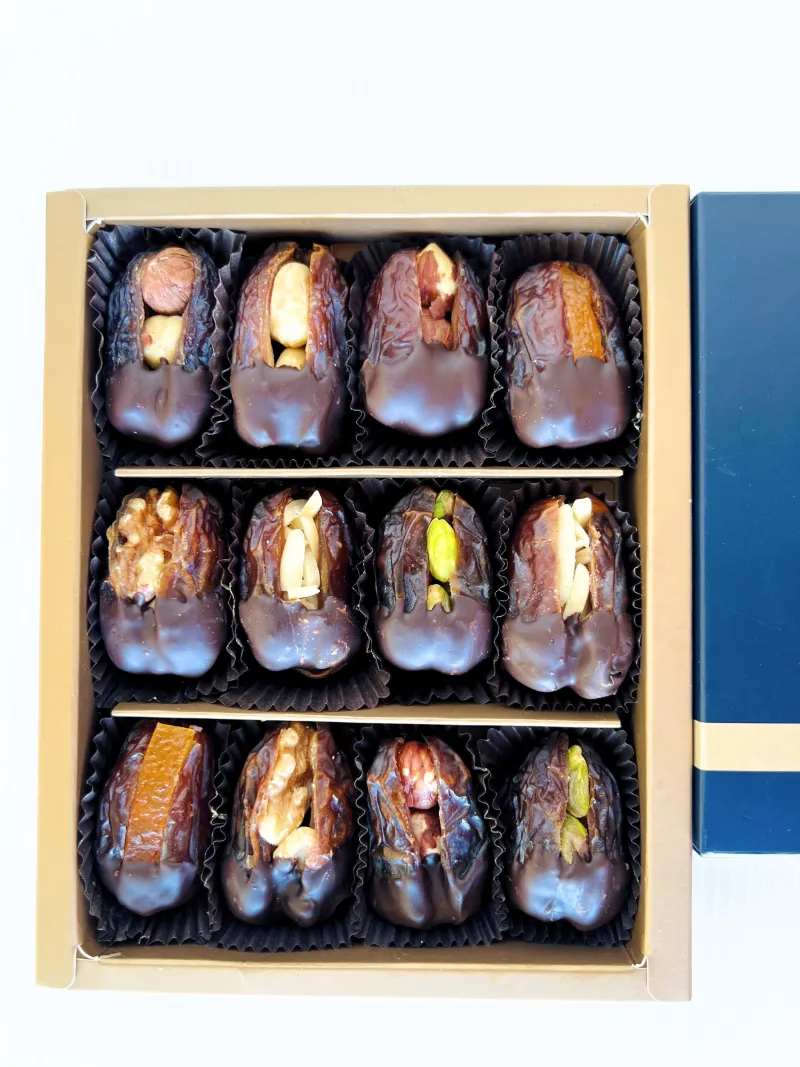
At Sweet Dubai, we have observed this influence with particular interest. The tradition of gifting perfumed sweets — confections scented with orange blossom, mastic, or the resinous warmth of oud — is deeply woven into Gulf culture, and it is no coincidence that global luxury brands are arriving at similar conclusions through their own creative evolution. The Emirati approach to hospitality, in which scent and sweetness are understood as inseparable expressions of generosity, has quietly shaped the aesthetic ambitions of the world's most forward-thinking confectioners.
What the American Consumer Stands to Gain
For affluent American consumers, the fragrance-confectionery crossover arrives at a particularly receptive cultural moment. The premium sweets market in the United States has expanded dramatically over the past five years, driven by a clientele that increasingly views dessert not as a simple indulgence but as a curated experience — one worthy of the same discernment applied to a wine selection or a bespoke garment.
This consumer is not merely seeking sweetness. They are seeking story, provenance, and the kind of sensory complexity that justifies a premium price point. A chocolate truffle that carries the DNA of a Guerlain fragrance, or a pastry that translates the top notes of a Cartier perfume into a tangible, consumable form, offers precisely this: a narrative that extends beyond the palate and into the realm of identity and memory.
Retailers such as Neiman Marcus and Bergdorf Goodman have already begun to recognize this appetite, curating confectionery selections that sit comfortably alongside their fragrance counters. The symbolic proximity is intentional. These are products that speak the same language of aspiration.
The Science of Scent Memory as a Marketing Force
Beyond aesthetics, there is a powerful commercial logic at work. Fragrance brands have spent decades — in some cases, centuries — building extraordinarily potent emotional associations with their scent profiles. The smell of Chanel No. 5 does not merely register as pleasant; for millions of consumers, it carries the full emotional weight of a particular memory, a person, or a defining moment in their lives.
To translate that emotional equity into an edible format is to unlock a form of brand intimacy that conventional confectionery cannot replicate. When a consumer bites into a violet-and-iris bonbon and finds themselves transported to the memory of opening a gift box of Guerlain's Insolence for the first time, the brand has achieved something extraordinary: it has become part of the autobiography of the senses.
This is the deeper promise of the fragrance-confectionery crossover — not merely novelty, but a new grammar of luxury experience, one in which the boundaries between wearing beauty and tasting it dissolve entirely.
Looking Forward: A New Category of Luxury
Industry observers anticipate that the next five years will see a significant acceleration of this trend, particularly as more fragrance houses explore collaborations with Michelin-starred pastry chefs and artisan chocolatiers. The opportunity for limited-edition, seasonally released confectionery collections — timed to coincide with fragrance launches, much as fashion houses coordinate runway shows with capsule collections — is substantial.
For the American luxury consumer, this convergence represents an invitation to experience the familiar in an entirely new register. The perfume bottle, long a symbol of aspiration displayed upon a vanity or offered as a declaration of affection, is finding a new form — one that can be savored, shared, and experienced in a single, luminous moment of pleasure.
At Sweet Dubai, we believe this is precisely the kind of innovation that honors the deepest traditions of luxury: the understanding that the most precious gifts are those that engage not just the eye or the hand, but the full, magnificent range of human perception.