From Souk to Confectionery Counter: Why Arabian Flavors Are Redefining American Luxury Chocolate
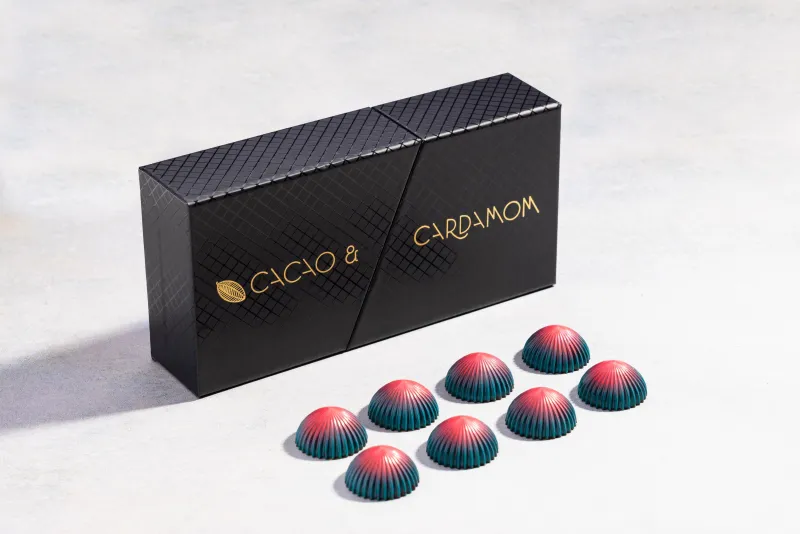
Photo: luxury artisan chocolate rose cardamom Middle Eastern flavors elegant packaging, via www.cacaoandcardamom.com
Walk into any high-end chocolatier in a major American city today, and there is a reasonable chance you will encounter something unexpected: a truffle infused with cardamom, a bar ribboned with rose water ganache, or a bonbon whose aroma carries the faint, resinous warmth of oud. These are not novelty items. They are the leading edge of a genuine shift in how American consumers — particularly those at the luxury end of the market — are thinking about chocolate.
The influence driving this movement has a clear cultural address: Dubai. The Emirate has long maintained one of the world's most sophisticated and eclectic dessert cultures, one that draws from Levantine, Persian, South Asian, and European traditions while remaining distinctly its own. As Dubai's global cultural footprint has expanded — through travel, social media, and the international reach of its hospitality brands — its flavor vocabulary has traveled with it.
The Ingredients Behind the Movement
To understand why Arabian-inspired chocolates are gaining traction, it helps to examine the specific ingredients at the heart of the trend.
Cardamom is perhaps the most immediately approachable of the three primary flavors driving this movement. Its warm, citrus-adjacent spice integrates naturally with both milk and dark chocolate, offering complexity without confrontation. American palates, already accustomed to cardamom through Scandinavian baked goods and specialty coffee culture, have found it an intuitive bridge into Middle Eastern flavor territory.
Rose presents a more nuanced proposition. In the wrong hands, rose-infused chocolate can veer toward the floral and perfumed in ways that feel incongruous. In the right hands — specifically, when rose water or rose extract is used with restraint alongside high-quality dark chocolate — the result is something genuinely distinctive: a confection that is simultaneously romantic and sophisticated, with a finish that lingers pleasantly.
Oud, the aromatic resin derived from agarwood and one of the most prized fragrances in the Arab world, represents the frontier of this trend. Its use in food and confectionery is still relatively rare in the United States, but a small number of pioneering chocolatiers have begun incorporating oud-inspired flavor profiles — smoky, woody, faintly sweet — into their bonbons and ganaches. The response among adventurous consumers has been notable.
Why Affluent American Consumers Are Paying Attention
The appeal of Arabian-inspired luxury chocolates extends well beyond novelty. Several converging forces have created a receptive audience.
First, there is the broader cultural moment. American consumers with disposable income and a taste for premium goods have become increasingly sophisticated in their pursuit of unique experiences. In the food and beverage sector, this has translated into a sustained appetite for authentic, globally sourced flavors — ones that carry a genuine cultural narrative rather than a vague exotic gloss.
Dubai, as a concept, carries considerable aspirational weight in American culture. Its association with architectural audacity, high-net-worth travel, and unapologetic opulence has made it a compelling reference point for luxury brands across multiple categories. In the confectionery space, invoking Dubai's aesthetic and flavor culture signals a specific kind of premium positioning — one that resonates with consumers who have either visited the Emirate or aspire to the lifestyle it represents.
Second, there is the Instagram effect. Arabian-inspired chocolates — particularly those finished with edible gold, dried rose petals, or the deep green of crushed pistachios — photograph exceptionally well. In a market where visual appeal drives purchasing decisions as powerfully as taste, this is not a trivial advantage.
How American Chocolatiers Are Approaching the Craft
The most thoughtful practitioners of this trend are those who approach Middle Eastern flavors with genuine curiosity and culinary rigor, rather than treating them as a surface-level aesthetic exercise.
Several independent chocolatiers in New York, Chicago, and the San Francisco Bay Area have begun sourcing their cardamom from Guatemala and their saffron from Kashmir — the same regions that supply Dubai's finest pastry kitchens. They are working with single-origin cacao that can hold its own against powerful aromatics without being overwhelmed. They are consulting with chefs and food scholars with deep knowledge of Levantine and Gulf cuisine to ensure their flavor pairings reflect genuine culinary logic.
The results, at their best, are chocolates that feel less like a fusion experiment and more like a natural evolution — as though these flavors were always meant to find their way into ganache.
A Curated Selection: Arabian-Inspired Artisan Chocolates Worth Seeking Out
For American consumers eager to explore this category, the following represent some of the most accomplished examples currently available.
Rose and Raspberry Dark Chocolate Bonbons — Several New York–based chocolatiers have mastered this pairing, using food-grade rose water from Lebanon alongside tart raspberry to create a bonbon that balances sweetness, acidity, and floral complexity with admirable precision.
Cardamom Milk Chocolate Caramels — The combination of cardamom and caramel has deep roots in Gulf cuisine, where cardamom-spiced coffee is a cultural staple. American chocolatiers have translated this into a caramel truffle that feels both familiar and surprising, with the spice warming the back of the palate long after the chocolate has melted.
Pistachio and Saffron White Chocolate Bark — White chocolate's inherent sweetness and creaminess make it an ideal canvas for saffron's honeyed, slightly medicinal depth. Finished with crushed Iranian pistachios and a dusting of edible gold, this bark is one of the most visually arresting products in the category.
Oud-Infused Dark Chocolate Truffles — Rare but increasingly available through specialty online retailers, these truffles use oud-derived flavoring to create a chocolate experience that is genuinely unlike anything in the conventional American market. They are not for the timid, but for the curious and the adventurous, they represent something close to a revelation.
The Trajectory of a Trend
It would be premature to describe Arabian-inspired chocolate as a mainstream phenomenon. It remains, for now, a niche within the already specialized world of artisan confectionery. However, the signals pointing toward broader adoption are difficult to ignore.
Luxury hospitality brands with Dubai connections are beginning to offer branded confectionery lines in their American properties. High-end grocery retailers are allocating more shelf space to Middle Eastern-flavored sweets. And social media continues to amplify the visual appeal of these products to audiences that extend well beyond the existing specialty chocolate customer base.
What began as a whisper from the souks and hotel patisseries of the Emirates is becoming something considerably more audible in the American luxury market. For those who have already discovered the pleasures of rose ganache and cardamom truffle, this is very welcome news indeed.