Red Gold on the Rise: How Saffron Became the Most Coveted Spice in American Luxury Confectionery
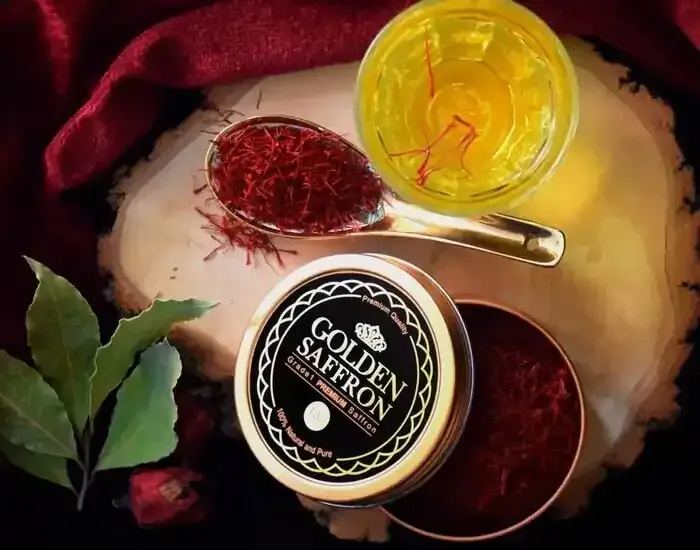
Photo: saffron threads luxury spice golden close-up with chocolate truffles, via www.goldensaffron.com
There is a moment, familiar to anyone who has wandered through Dubai's historic spice souks, when the air itself seems to change. Beneath the covered archways of Deira, wooden crates overflow with crimson threads so vivid they appear almost luminescent. The scent is impossible to ignore — floral, faintly metallic, ancient. This is saffron in its most elemental form, and for centuries, it has been the defining ingredient of Gulf confectionery culture. Today, that tradition is fueling one of the most compelling trends in American luxury food.
Across the United States, a growing cohort of elite pastry chefs and boutique confectionery brands are investing heavily in premium saffron, treating it not as a mere flavoring agent but as a statement of culinary philosophy. The spice, harvested from the delicate stigmas of Crocus sativus flowers, requires extraordinary human labor — each bloom yields only three threads, all of which must be hand-picked during a narrow autumn window. It takes roughly 75,000 flowers to produce a single pound of finished saffron. The economics of that equation explain why the spice routinely sells for between $5,000 and $10,000 per pound at the highest quality tiers, earning its enduring nickname: red gold.
The Dubai Connection: A Culinary Heritage Written in Crimson
To appreciate saffron's current American moment, it is essential to understand its cultural weight within the broader Middle Eastern and Emirati culinary tradition. In Dubai, saffron is not an accent — it is architecture. It forms the backbone of karak chai, the beloved spiced tea that fuels the city's social rituals. It perfumes luqaimat, the honey-drizzled dumplings sold by street vendors and five-star hotel patisseries alike. It appears in the golden hue of saffron rice served at formal gatherings, and perhaps most relevantly for the confectionery world, it saturates the milk-based sweets and halwa preparations that have defined Emirati celebration desserts for generations.
The variety most prized within Gulf culinary circles — and increasingly sought by American buyers — originates in Iran's Khorasan region and Afghanistan's Herat province, though Spanish Mancha saffron maintains a loyal following among European-trained chefs. What distinguishes the highest grades, particularly the coveted Super Negin classification, is a near-total absence of yellow and white thread portions, a deep burgundy color, and an exceptional concentration of safranal and crocin compounds, the chemical markers of flavor and pigmentation potency.
From Artisan Chocolatiers to Michelin-Starred Pastry Kitchens
The American luxury food sector has historically borrowed from European culinary traditions when seeking prestige ingredients. Tahitian vanilla, Valrhona chocolate, Maldon sea salt — these have long served as the shorthand vocabulary of upscale American confectionery. Saffron represents something different: an invitation into a culinary world that most American consumers know only by reputation.
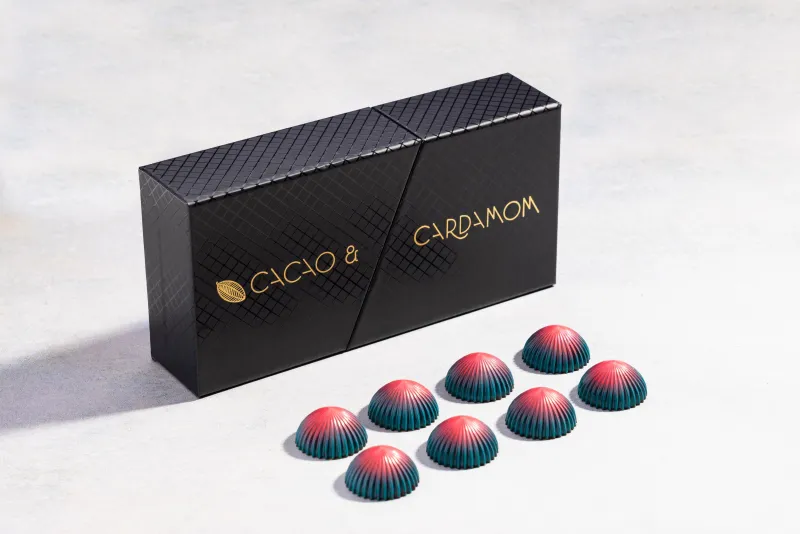
Boutique chocolatiers in cities such as San Francisco, Chicago, and Miami have begun featuring saffron-infused ganaches and caramels as centerpiece offerings in their seasonal collections. The approach is rarely subtle. A saffron and rose water dark chocolate truffle, finished with a single visible thread pressed into the surface, communicates its own narrative of origin and intention before the first bite. Some producers are pairing saffron with cardamom and pistachio — a combination deeply familiar to anyone versed in Gulf dessert traditions — creating bonbons that read simultaneously as exotic and deeply coherent.
The caramel category has proven particularly receptive to saffron's charms. The spice's natural bitterness acts as a counterpoint to caramel's sweetness, while its floral complexity adds a dimension that vanilla, however excellent, simply cannot replicate. Several American luxury confectionery brands have introduced saffron caramels at price points that would have seemed implausible a decade ago — individual pieces retailing for upward of eight dollars are finding enthusiastic buyers among consumers accustomed to paying premium prices for specialty coffee, single-origin chocolate, and small-batch spirits.
The Sourcing Challenge: Authenticity in an Adulterated Market
For pastry professionals entering the saffron market, the greatest obstacle is not price — it is verification. The global saffron trade has a well-documented adulteration problem, with inferior product frequently bulked out using safflower petals, dyed corn silk, or chemically treated threads. Studies conducted by food science institutions have found that a significant proportion of commercially available saffron fails to meet the quality standards its labeling implies.
Serious American buyers are responding by establishing direct relationships with importers who can provide documentation of origin and third-party testing for ISO 3632 compliance, the international standard for saffron quality classification. Some have gone further, partnering with specialty importers who maintain direct sourcing relationships with farming cooperatives in Iran and Afghanistan. These arrangements carry their own complications — geopolitical factors affecting trade with Iran in particular require careful navigation — but for chefs committed to authenticity, they represent the only reliable path to genuinely premium product.
The Sweet Dubai philosophy has always held that the finest luxury confectionery is inseparable from the integrity of its ingredients. Saffron, more than almost any other spice, demands that standard of rigor.
A Market Primed for the Extraordinary
The timing of saffron's American ascent is not coincidental. A broader cultural appetite for Middle Eastern flavors — accelerated by the global reach of Gulf hospitality brands, the rise of Emirati cuisine on the international stage, and a generation of American food enthusiasts eager to move beyond the familiar — has prepared the market for exactly this kind of ingredient story.
Consumers who once needed saffron explained to them now seek it out deliberately, drawn by its mythology as much as its flavor. The price point, far from being a deterrent, functions as a signal of seriousness. In the vocabulary of American luxury consumption, paying more for something rare and labor-intensive is not an inconvenience — it is the point.
For the pastry chefs and confectionery makers who have already embraced red gold, the question is no longer whether saffron belongs in the American luxury dessert conversation. It is how far that conversation will travel, and how brilliantly the spice will illuminate it along the way.