The Jewel of the Palm Grove: How the Medjool Date Is Claiming Its Place at the American Fine Dessert Table
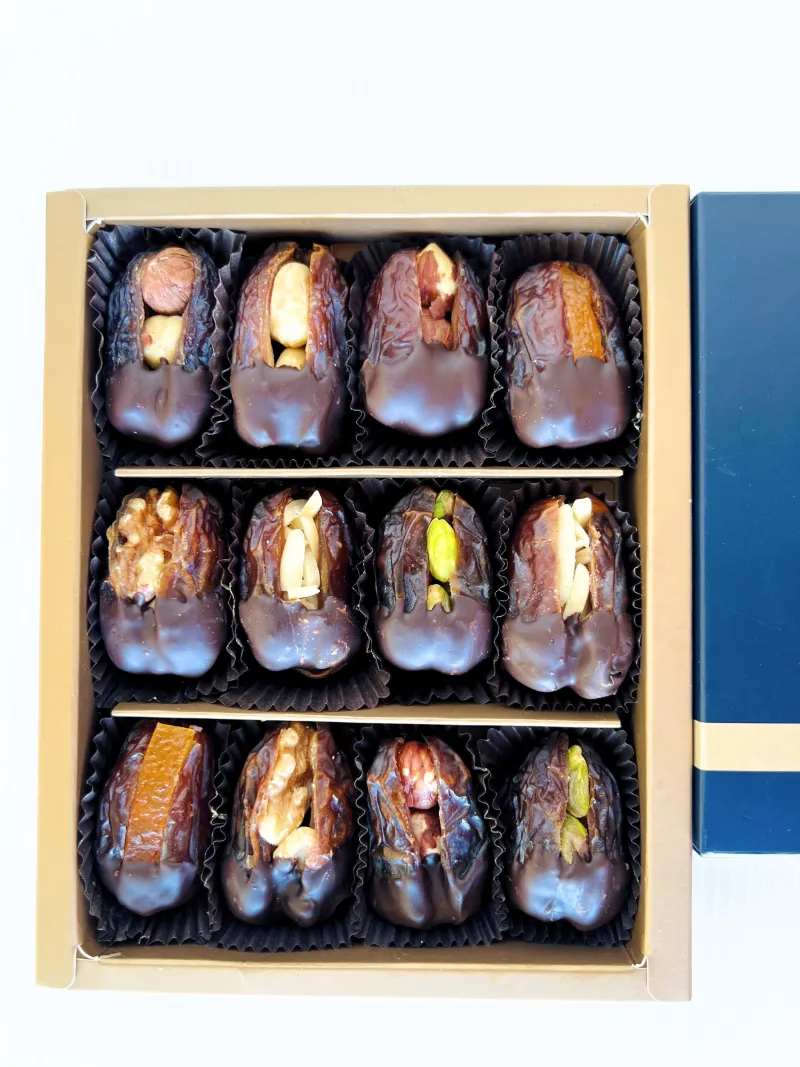
Photo: medjool dates chocolate gold luxury dessert plating elegant, via www.palmettes.com
In the markets of Dubai, a single date is never merely a date. It is an offering — an ancient gesture of welcome extended to guests before a meal, a symbol of abundance presented at celebrations, and a confection of such natural complexity that it has sustained entire culinary traditions for millennia. The medjool, largest and most prized of all date varieties, carries within its amber flesh a flavor profile of extraordinary depth: notes of caramel and brown sugar, a whisper of vanilla, a finish that lingers with the warm persistence of fine toffee.
American pastry chefs, it seems, are only now beginning to appreciate what the Arabian Peninsula has known for centuries.
From Bulk Bin to Boutique Patisserie
The medjool date's journey through the American culinary imagination has been, until recently, a modest one. For decades, it occupied the periphery of the domestic pantry — a wholesome snack, perhaps, or a natural sweetener for the health-conscious. Its appearance at the dessert table was largely confined to stuffed preparations: a walnut pressed into the cavity, a dusting of powdered sugar, a drizzle of honey. Respectable, certainly. But hardly the stuff of gastronomic ambition.
The shift began quietly, gathering momentum as American consumers grew increasingly drawn to ingredients with strong cultural narratives and nutritional pedigrees. The medjool offered both in abundance. Rich in natural sugars, potassium, and dietary fiber, it appealed to a wellness-oriented clientele that nonetheless refused to sacrifice indulgence. More importantly, it arrived carrying the full weight of Gulf culinary heritage — a provenance that, in an era when origin stories drive premium pricing, proved extraordinarily compelling.
Today, a growing cohort of pastry innovators across New York, Los Angeles, Chicago, and beyond are treating the medjool not as a supporting ingredient but as a primary subject — a fruit of sufficient complexity to anchor an entire dessert program.
Techniques That Honor the Fruit's Inherent Luxury
What distinguishes the finest date-forward desserts currently emerging from American pastry kitchens is the seriousness with which their creators approach the fruit's natural character. Rather than masking the medjool's flavor beneath competing elements, the most accomplished preparations seek to amplify and refine it — to bring its inherent luxury into sharper focus.
One technique gaining considerable traction among high-end confectioners involves a slow, low-temperature reduction of date paste with clarified butter and a touch of fleur de sel, producing a caramel of remarkable depth that serves as both a filling and a glaze. Applied to hand-tempered dark chocolate shells or used as the base of a tart with a sablé Breton crust, this date caramel demonstrates the fruit's capacity to perform at the highest levels of pastry craft.
Another approach, inspired directly by the Emirati tradition of pairing dates with cardamom and rose water, involves infusing medjool flesh with these aromatics before incorporating it into a semifreddo or a chilled parfait layered with pistachio praline. The result is a dessert that speaks fluently in the language of Gulf hospitality while presenting itself in an idiom immediately accessible to the American fine dining palate.
And then there is the matter of texture. The medjool's natural chewiness — that yielding, almost confectionery-like resistance — makes it an ideal candidate for treatments more commonly associated with premium chocolate work. Enrobing whole dates in single-origin couverture, dusting them with edible gold, or setting them in jewel-like terrines of saffron-scented gelée are all techniques being employed by pastry chefs who recognize in the fruit a natural affinity for the vocabulary of luxury confectionery.
The Cultural Significance That Elevates the Ingredient
At Sweet Dubai, we would be remiss not to address the cultural dimension that lends the medjool its particular resonance in a luxury context. In the Gulf, and especially in the Emirates, the date palm is not merely an agricultural resource. It is a symbol of national identity, resilience, and generosity — an emblem so central to Emirati culture that it appears on the nation's coat of arms.
The ritual of offering dates to guests is among the most fundamental expressions of Arabian hospitality. To receive a date is to receive a welcome; to serve one is to declare the value you place upon your guest's comfort and pleasure. This cultural weight does not diminish when the date travels to an American pastry kitchen. On the contrary, it enriches the ingredient with a layer of meaning that few other fruits can claim.
For luxury consumers who increasingly seek products with authentic cultural narratives — who wish to understand not just what they are eating, but where it comes from and what it means — the medjool date offers an unusually complete story. It is ancient and contemporary, healthful and indulgent, deeply regional and surprisingly universal in its appeal.
Pastry Innovators Charting the Course
Among those leading this movement, several names have emerged with particular distinction. Pastry chefs at prominent tasting-menu restaurants in Manhattan have begun incorporating date-based mignardises into their closing courses, presenting guests with single-origin medjools from California's Coachella Valley — one of the few domestic growing regions capable of producing fruit of comparable quality to those harvested in the Arabian Peninsula — enrobed in Venezuelan cacao and finished with a dusting of sumac.
In Los Angeles, a new wave of luxury confectionery boutiques has begun offering date-centered gift collections that draw explicit inspiration from the tradition of Gulf hospitality gifting. Presented in lacquered boxes reminiscent of the ornate packaging common to Dubai's finest sweet shops, these collections pair premium medjools with house-made tahini ganaches, cardamom-infused milk chocolates, and delicate wafers flavored with orange blossom water.
The common thread uniting these varied expressions is a conviction that the medjool date, properly understood and skillfully handled, requires no apology and no disguise. It is, in and of itself, a luxury ingredient — one that asks only to be treated with the same respect and technical rigor that any great raw material deserves.
A Sweet Future Rooted in Ancient Ground
The trajectory of the medjool date in American fine confectionery is, at this stage, unmistakably upward. As consumers continue to gravitate toward ingredients that offer both nutritional integrity and genuine sensory pleasure, and as the cultural influence of Gulf culinary traditions deepens its hold on the American luxury palate, the date's prominence at the dessert table will only grow.
For those of us at Sweet Dubai who have long understood the extraordinary potential of this golden fruit, the moment feels less like a discovery than a long-overdue recognition. The jewel of the palm grove has always been worthy of the finest table. America is simply learning, at last, to set a place for it.