Lustre and Legacy: How Edible Pearls Became the Most Ethical Status Symbol in American Luxury Desserts
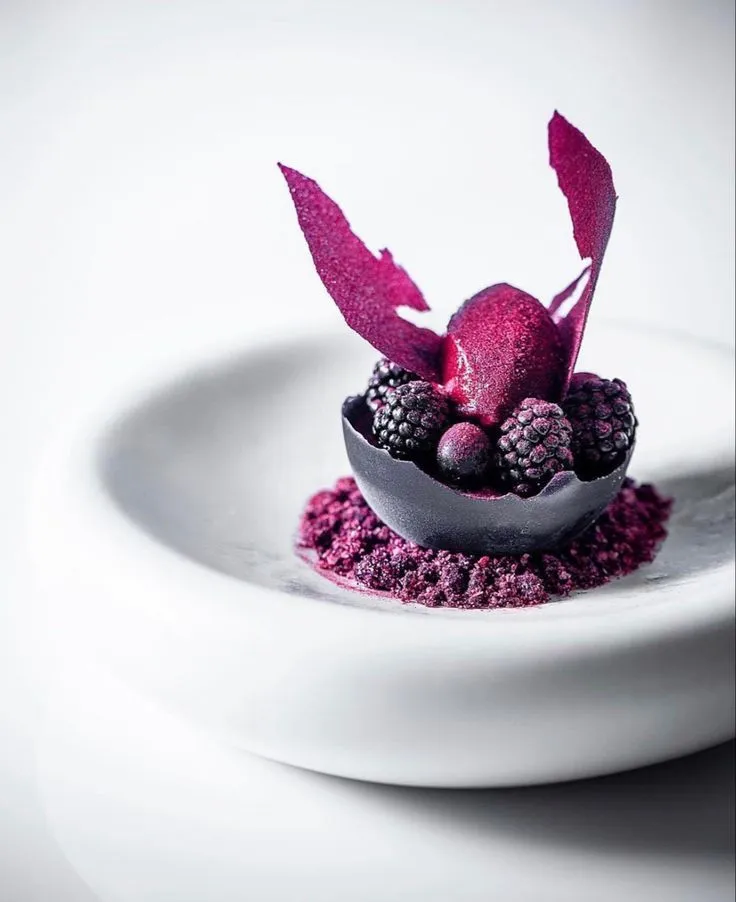
Photo: edible pearls luxury dessert plating iridescent garnish fine dining, via i.pinimg.com
There is a particular kind of cognitive dissonance that tends to accompany luxury. The more extravagant the ingredient, the more fraught its origins often prove to be — a truth that has shadowed everything from foie gras to certain rare spices for decades. And yet, tucked inside the gleaming dessert cases of a growing number of American fine dining establishments, one ingredient is quietly defying that expectation. Edible pearls — and the broader family of mother-of-pearl derived toppings now appearing across gourmet confectionery — are emerging as something genuinely rare: a symbol of opulence with a sustainability narrative robust enough to withstand scrutiny.
For those who follow the culinary traditions of the Arabian Gulf, this development carries a particular resonance. Dubai's relationship with the pearl is ancient and profound. Long before the discovery of oil transformed the emirate into a skyline of impossible ambition, pearl diving was the economic and cultural heartbeat of the region. The Gulf's warm, shallow waters yielded some of the world's finest natural pearls, and the trade that flourished around them shaped the identity of communities across what is now the UAE. To invoke the pearl in a Dubai-inspired dessert context is not mere decoration — it is a gesture toward an entire civilization's heritage.
From the Gulf to the Garnish Station
The transition of pearl-derived ingredients from jewelry box to pastry kitchen is more sophisticated than a casual observer might assume. The category encompasses several distinct products, each with its own production story. Edible sugar pearls — the most accessible and widely used variety — are manufactured confections designed to mimic the visual quality of genuine pearls, typically composed of sugar, starch, and food-grade luster dust. These are the workhorses of the wedding cake world and carry no particular sustainability complexity.
More interesting, from both a culinary and an ethical standpoint, are products derived from actual nacre — the biological material, commonly called mother-of-pearl, that mollusks produce to line their shells. Food-grade nacre powder and nacre-infused ingredients are now being sourced by a small but growing cohort of American pastry professionals who prize their genuine iridescence and the faint, mineral-tinged flavor they contribute. The sustainability case for these products rests on a straightforward biological reality: nacre is harvested from the shells of pearl-bearing mollusks, many of which are raised in certified aquaculture operations where the environmental footprint is carefully managed. Unlike extractive luxury ingredients, farmed pearl production can actively support marine ecosystem health when practiced responsibly, with mollusks filtering water as a natural byproduct of their cultivation.
The Chefs Leading the Conversation
Across the United States, a discernible pattern is emerging among pastry professionals drawn to this ingredient category. In New York, several tasting-menu restaurants have introduced dessert courses that feature nacre-dusted chocolates or panna cottas finished with an almost holographic shimmer — an aesthetic that reads immediately as Dubai-coded to a clientele increasingly familiar with the visual language of Gulf luxury. In Los Angeles, where the intersection of wellness culture and fine dining is particularly acute, the sustainability dimension of responsibly sourced nacre has proven a compelling selling point alongside its undeniable visual drama.
What unites these applications is a shared understanding that the ingredient must do more than look extraordinary. Chefs who have worked most successfully with nacre-derived products describe a subtle but genuine flavor contribution — a clean, oceanic minerality that functions as a kind of sophisticated counterpoint to the sweetness of the desserts it adorns. Paired with dark chocolate ganache, a dusting of nacre powder introduces a salinity-adjacent quality that elongates the finish. Applied to a rosewater-scented cream, it amplifies the floral notes while adding structural visual interest that no synthetic luster dust can fully replicate.
The Paradox Explained
The pearl paradox, then, is this: the ingredient that appears most gratuitously decorative — most aggressively luxurious in its visual connotations — turns out to carry a production story that many far more humble ingredients cannot match. Certified pearl aquaculture operations in Australia, Japan, and increasingly in the Pacific Islands operate under environmental standards that prioritize water quality and biodiversity. The mollusks themselves require no feed inputs beyond what the surrounding marine environment naturally provides. The shells, once harvested, yield both the pearl and the nacre, meaning that virtually no part of the organism goes to waste.
For American luxury consumers who have grown increasingly attentive to the ethics behind their indulgences, this narrative is genuinely persuasive rather than merely convenient. It allows the dessert to function simultaneously as a statement of taste and a statement of values — a combination that the most discerning segment of the market has come to expect as a baseline.
Accessibility Without Compromise
For home bakers who wish to participate in this aesthetic without access to professional-grade nacre ingredients, the landscape is more navigable than one might expect. High-quality food-grade luster dusts in silver, ivory, and champagne tones — available through specialty baking suppliers and increasingly through mainstream online retailers — can approximate the visual quality of genuine nacre with considerable fidelity when applied with care. The key, according to professionals who work in both registers, is restraint. A single, deliberate application of luster dust to a chocolate truffle or a petit four achieves a far more sophisticated result than an indiscriminate coating.
Edible sugar pearls in graduated sizes, when arranged with intentionality on a plated dessert or a celebration cake, evoke the Gulf pearl trading tradition in a manner that is both accessible and genuinely beautiful. The goal is never to deceive — it is to participate in a visual language that connects American dessert culture to one of the world's most storied luxury traditions.
A Heritage Worth Honoring
Dubai's pearl diving legacy is not a footnote — it is the foundation upon which the emirate's identity as a place of beauty, ambition, and extraordinary craftsmanship was first constructed. When American pastry chefs reach for these lustrous, iridescent ingredients, they are, whether consciously or not, extending a line of cultural continuity that runs from the warm waters of the Arabian Gulf to the most sophisticated dessert tables in the world. That this gesture also happens to align with the best available practices in sustainable ingredient sourcing is not a coincidence. It is, perhaps, exactly what one should expect from an ingredient whose entire existence is a testament to the patient, improbable transformation of something ordinary into something transcendent.