What a Single Truffle Actually Costs: Decoding the Economics of Dubai's Elite Confectionery Studios

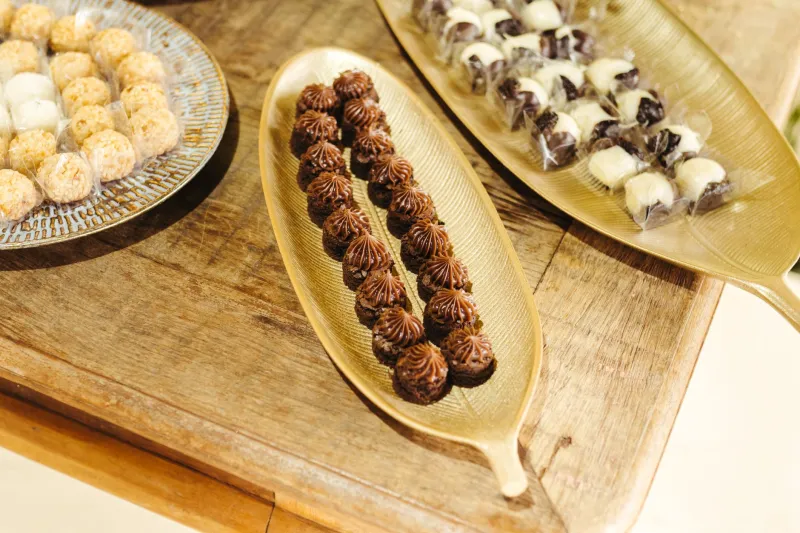
There is a moment, familiar to anyone who has encountered truly exceptional confectionery, when the price gives one pause. A single chocolate truffle for eighteen dollars. A box of six date-and-saffron bonbons approaching one hundred and twenty. A bespoke dessert commission that rivals a week's grocery budget. For the uninitiated, these figures can seem theatrical — a performance of luxury rather than a reflection of genuine value. For those who understand what lies beneath the gilded surface, however, the arithmetic tells an entirely different story.
Dubai's most celebrated confectionery ateliers have long operated according to an economics of excellence that is, upon closer examination, both rigorous and defensible. Understanding that economics — the sourcing decisions, the labor investments, the production timelines — offers American consumers a far more nuanced lens through which to evaluate what they are actually purchasing when they invest in handcrafted luxury sweets.
The Ingredient Ledger: Where the Costs Begin
The financial foundation of any serious luxury confection is built on ingredients, and in Dubai's premier studios, ingredient sourcing is treated less as procurement and more as curation. Consider saffron, which commands prices ranging from three to five thousand dollars per pound for the highest-grade Iranian or Kashmiri varieties. A single kilogram of premium Valrhona single-origin chocolate — favored by many Dubai ateliers for its traceability and flavor complexity — can cost upward of forty dollars, compared to commodity chocolate at a fraction of that price.
Then there are the regional specialties that define the Dubai confectionery aesthetic: hand-harvested Medjool dates from Jordan's Wadi Rum valley, rose water cold-pressed from Bulgarian Damask roses, and wild-harvested Arabic gum resins sourced through relationships with specific Sudanese suppliers. Each of these ingredients arrives with a provenance story and a corresponding cost structure that mass-market confectioners simply do not absorb.
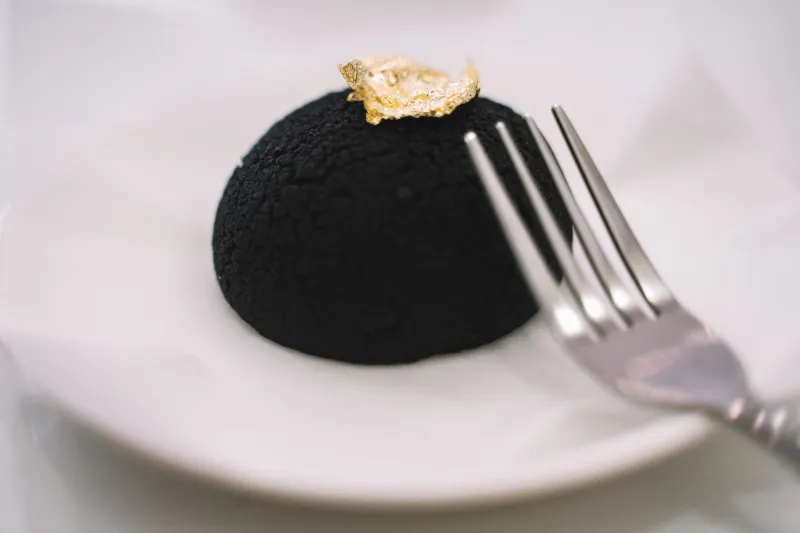
Edible gold leaf, perhaps the most visually iconic element of Dubai-inspired luxury confectionery, commands its own premium. Twenty-three-karat edible gold, certified food-safe and applied by hand, runs approximately eighty to one hundred dollars per book of twenty-five sheets. A single decorated bonbon may require a quarter of a sheet, applied with a fine brush over the course of several careful minutes. The math accumulates with remarkable speed.
The Labor Equation: Time as the True Luxury
If ingredients represent the raw material of luxury, skilled artisan labor is its most irreplaceable currency. Dubai's leading confectionery studios draw from a global pool of trained pastry professionals, many of whom hold credentials from institutions such as the École Ferrandi in Paris or the Culinary Institute of America. These artisans command salaries commensurate with their expertise, and their expertise is precisely what transforms expensive ingredients into something transcendent.
The production of a single hand-tempered chocolate shell — the kind that produces the characteristic sharp snap beloved by connoisseurs — requires temperature management within a range of less than two degrees Fahrenheit, executed through a process that cannot be meaningfully accelerated. A skilled chocolatier working at this level may produce between sixty and eighty finished bonbons per hour under ideal conditions. Scale that against an hourly labor cost of forty to sixty dollars for a senior artisan, and the per-unit labor contribution becomes immediately legible.
More complex creations demand considerably more time. Layered confections incorporating hand-piped ganache, individually crystallized botanicals, and painted luster finishes may require four to six hours of cumulative artisan attention per dozen pieces. Bespoke commissioned work — a wedding dessert collection, a corporate gifting suite, a personalized presentation box — often involves design consultations, prototype development, and revision cycles that add hours before production even begins.
Production Timelines and the Cost of Patience
Luxury confectionery in the Dubai tradition is not produced on demand. The finest ateliers operate on production calendars that reflect the inherent timelines of their craft. Properly matured ganaches require resting periods of twelve to forty-eight hours to achieve optimal texture and flavor integration. Certain sugar work, including the pulled and blown sugar sculptures that grace the most elaborate presentations, demands days of incremental construction. Fermented and aged components — a caramel deepened with aged date vinegar, for instance — may begin their development weeks before the final product is assembled.
These timelines are not affectations. They reflect genuine chemical and physical processes that cannot be circumvented without compromising the outcome. A ganache rushed to production before its emulsion has fully stabilized will taste perceptibly different from one given proper time. The patience embedded in a luxury confection's production schedule is itself an ingredient — one that carries real cost in terms of refrigerated storage, kitchen time, and the opportunity cost of artisan attention.
The American Consumer's Value Calculation
For American luxury consumers, accustomed to evaluating premium products across categories from fine wine to bespoke tailoring, the Dubai confectionery value proposition maps onto a familiar framework. The question is never simply whether something is expensive, but whether the experience it delivers is proportionate to its price.
Research into American luxury spending patterns consistently reveals that high-net-worth consumers are not primarily motivated by exclusivity signaling when purchasing handcrafted food items. Rather, they cite sensory distinctiveness, demonstrable craft, and the confidence that comes with transparent quality standards. Dubai-inspired confectionery, with its traceable ingredients, visible artisan labor, and flavor profiles unavailable in any mass-market context, speaks directly to all three motivations.
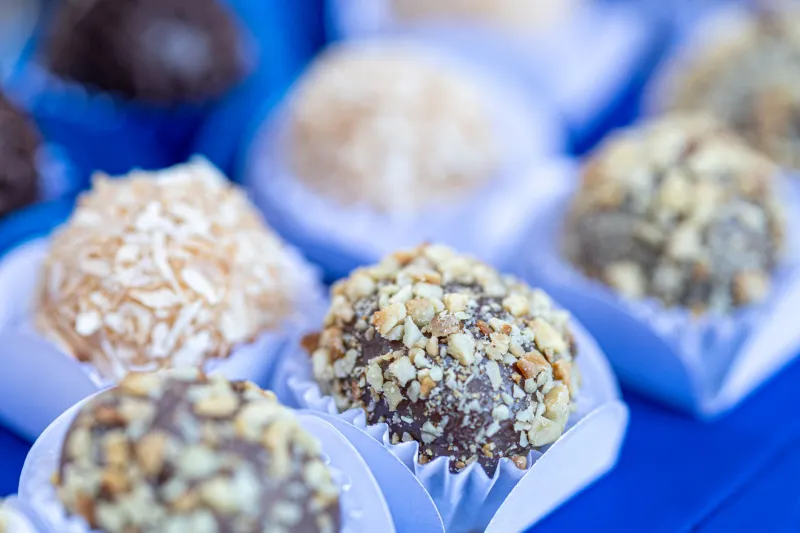
The comparison to mass-market alternatives is instructive. A supermarket chocolate truffle, produced at scale with commodity couverture and automated molding, might retail for under two dollars. The experience it delivers is correspondingly generic. The eighteen-dollar single-origin, hand-gilded truffle from a serious atelier offers something categorically different — not merely incrementally better, but experientially distinct in a way that price multiples alone cannot capture.
The Studio as Atelier: A Different Business Model Entirely
Perhaps the most important context for understanding Dubai confectionery economics is recognizing that the finest studios do not operate on the logic of volume retail. They function, instead, on the model of the luxury atelier — a term borrowed from fashion that implies small-batch production, individual attention, and an explicit rejection of scale as a primary value.
This model accepts lower unit volumes in exchange for higher per-unit quality and pricing. It invests in artisan relationships rather than automated equipment. It sources ingredients through personal supplier networks rather than commodity brokers. And it builds its reputation on the kind of word-of-mouth that follows genuinely exceptional work rather than on advertising reach.
For American consumers willing to engage with this model on its own terms, the economics of Dubai luxury confectionery reveal themselves not as extravagance, but as integrity — a commitment to doing things correctly, whatever that costs, and trusting that the result will justify every dollar of the investment.