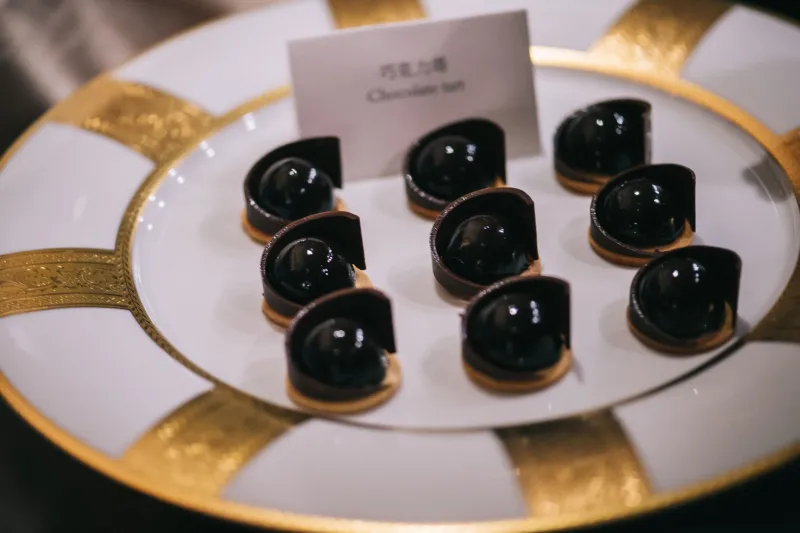
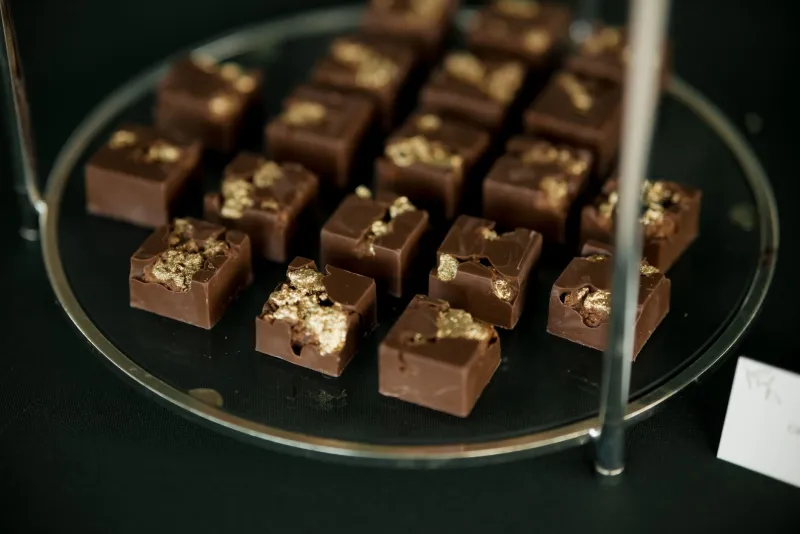
The Deliberate Pause: How Dubai's Master Confectioners Are Redefining Luxury Through the Art of Tasting Intervals
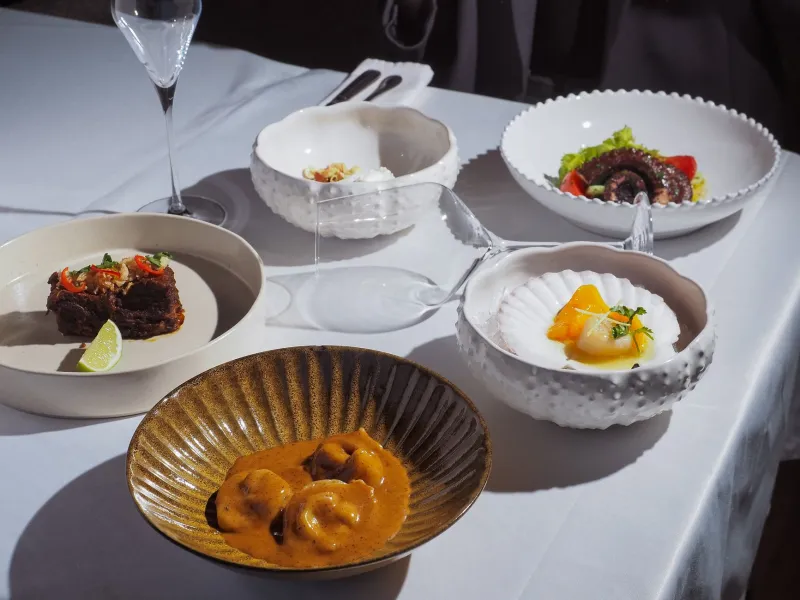
There is a moment, familiar to anyone who has sat through a truly exceptional tasting menu, when the table is cleared and nothing arrives. No amuse-bouche, no intermezzo, no apologetic explanation from a server. Simply: stillness. In Dubai's most rarefied confectionery experiences, that stillness is not an accident. It is a design decision — one made with the same precision and intentionality applied to every gram of saffron, every layer of phyllo, every hand-tempered chocolate shell on the menu.
The deliberate spacing of dessert courses has emerged as one of the most quietly radical ideas to surface from Dubai's luxury confectionery scene in recent years. Where American fine dining has traditionally prized momentum — the next course arriving just as the last has been savored, maintaining a rhythm of abundance — Dubai's elite pastry directors are arguing for something altogether different: the restorative, clarifying power of the interval.
The Psychology of the Pause
To understand why this approach carries such weight, it helps to consider what actually happens to the palate — and the mind — during an extended tasting. Sensory adaptation, the physiological process by which repeated stimulation diminishes perception, is the quiet enemy of every ambitious dessert menu. The third chocolate course, however masterfully conceived, will never register with the same intensity as the first, unless the palate has been given adequate time and contrast to reset.
Dubai's pastry directors have long been attuned to this reality. Rather than relying solely on flavor contrast between courses — a sharp citrus following a rich caramel, for instance — they have begun engineering time itself into the tasting experience. Intervals of eight to fifteen minutes between dessert courses are no longer unusual in the emirate's top-tier confectionery suites. Some establishments extend this further, offering guests a brief guided sensory reset: a warm, lightly scented towel, a few drops of still water infused with dried rose petals, or simply an invitation to step briefly onto a terrace overlooking the city's luminous skyline.
The effect, according to those who have experienced it, is not one of interruption but of amplification. Each subsequent course arrives not merely as the next item on a menu, but as something newly anticipated — a small event in itself.
Temporal Rhythm as a Form of Hospitality
For Dubai's luxury confectioners, the interval is not simply a neurological tool. It is an expression of a deeper philosophy of hospitality — one rooted in the region's traditions of measured generosity and considered welcome. In many Emirati and broader Gulf hospitality customs, the pace of a meal is understood to communicate respect: rushing a guest implies indifference; allowing a guest to settle, to breathe, to absorb, conveys that their presence is genuinely valued.
This cultural underpinning gives the tasting interval a resonance that extends beyond its physiological utility. When a pastry director in Dubai schedules a ten-minute pause between a cardamom-infused mille-feuille and a saffron panna cotta, they are not merely resetting the palate. They are making a statement about the worth of the experience — and, by extension, about the worth of the guest.
Several of Dubai's most prominent confectionery studios have begun formalizing this philosophy into what they describe as "temporal tasting architecture" — a structured approach to the sequencing and spacing of courses that treats time as a primary ingredient alongside flavor, texture, and temperature.
American Fine Dining Takes Notice
The influence of this approach is beginning to register in the United States, particularly among the country's most intellectually ambitious fine-dining establishments. In cities such as New York, San Francisco, and Chicago — where the tasting menu format has long been a vehicle for culinary experimentation — a small but growing number of pastry chefs are introducing deliberate intervals into their dessert sequences.
The motivation is partly philosophical and partly practical. American diners, particularly those in the upper tiers of fine-dining culture, have grown increasingly sophisticated in their expectations. The era of the twelve-course menu as a display of sheer volume has given way to a more discerning appreciation for restraint and intentionality. A pastry chef who can demonstrate that they have thought carefully about the timing of an experience — not merely its content — signals a level of mastery that resonates with this audience.
There is also a wellness dimension that speaks directly to contemporary American sensibilities. The deliberate pause, when framed appropriately, aligns with the broader cultural interest in mindfulness and presence. Encouraging a diner to sit quietly, to breathe, to become genuinely aware of their own sensory state before the next course arrives is, in its way, an act of radical hospitality in a culture that rarely slows down.
The Plate and the Clock
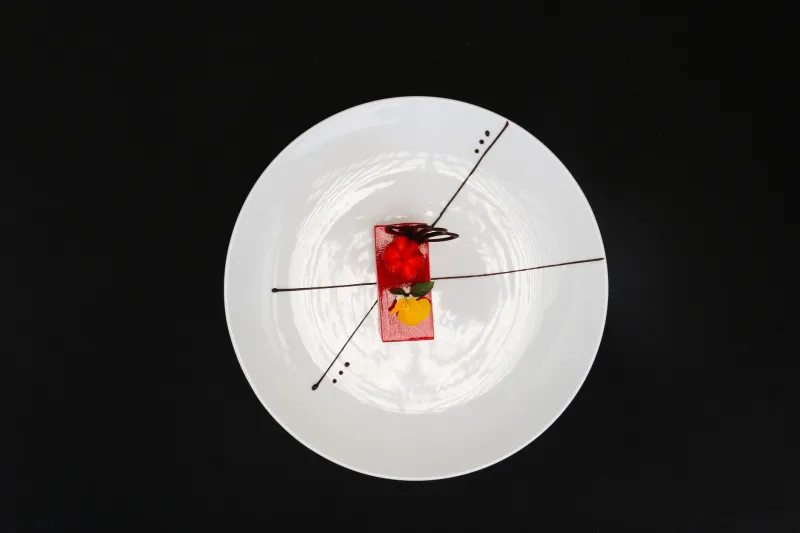
What is particularly fascinating about Dubai's approach is the degree to which the visual language of the dessert itself can echo the temporal philosophy of the menu. Pastry directors who embrace tasting intervals often speak of designing plates with what one might call "built-in breathing room" — compositions in which negative space on the platter mirrors the negative time between courses. A single, architecturally precise confection placed at the center of a wide, unadorned plate does not merely look elegant; it primes the diner to experience the dessert as an isolated, complete moment rather than as one element in a continuous stream.
This alignment between the visual and the temporal is not accidental. It reflects a coherent aesthetic sensibility — one in which every element of the experience, from the arrangement of a ganache to the length of a pause, is understood to communicate meaning. In this framework, the silence between courses is not empty. It is, in fact, extraordinarily full.
What American Hosts Can Learn
For American hosts and hospitality professionals interested in incorporating this philosophy, the entry point need not be a formal tasting suite in a luxury hotel. The principle scales remarkably well. A dinner party host who allows a genuine interval between a cheese course and a dessert — clearing the table fully, dimming the lights slightly, perhaps offering a small palate cleanser of sparkling water with a sliver of fresh citrus — creates a subtle but unmistakable shift in the quality of attention guests bring to what follows.
The lesson from Dubai is not that every dessert must be preceded by a dramatic pause. It is that the timing of an experience is itself a form of craftsmanship — one that the most thoughtful confectioners have always understood, and that the rest of us are only now beginning to appreciate fully.
In a culture that prizes speed and abundance, the deliberate pause is, perhaps, the most luxurious gesture of all.