Dessert as Meditation: How Dubai's Elite Confectioners Are Crafting Sweets That Demand Your Full Attention
There is a particular kind of silence that settles over a dining room when something extraordinary arrives at the table — not the silence of anticipation, but of surrender. In Dubai's most rarefied confectionery studios, that silence is no longer incidental. It is the point.
A generation of pastry architects working along Sheikh Zayed Road and within the quieter corridors of the city's private members' clubs has begun constructing dessert experiences with a singular ambition: to slow the diner down. To make the act of eating something sweet feel less like a transaction and more like a form of listening. The results are reshaping how a growing number of Americans think about what luxury confectionery can — and perhaps should — ask of them.
The Architecture of a Pause
To understand this movement, one must first understand what these confectioners are building against. The dominant language of American dessert culture for much of the past decade has been one of abundance and immediacy — towering sundaes engineered for social media, chocolate lava cakes timed to erupt on command, tasting menus that cycle through twelve courses in ninety minutes as though speed were itself a form of generosity.
Dubai's most thoughtful confectioners have looked at this landscape and chosen a different vocabulary entirely.
At the center of their philosophy is something they refer to, in various formulations, as the intentional interval — a moment built into the dessert's flavor architecture that creates a natural, almost involuntary pause. This might manifest as a ganache whose finish lingers for nearly a full minute, demanding patience before the next component is introduced. It might appear as a delicate layer of crystallized saffron that dissolves so gradually it seems to rewrite the experience of time itself.
These are not accidents of technique. They are decisions made with the precision of a composer inserting a rest into a musical score.
The Psychology of Slowness
Research into mindful eating has long suggested that the pace at which we consume food fundamentally shapes our perception of its quality. When the brain is given adequate time to process a flavor, it registers not only taste but emotional resonance — the faint warmth of cardamom, for instance, triggering something that feels less like a sensation and more like a memory.
Dubai's confectioners have, in many cases, arrived at this understanding through intuition rather than academic study. The tradition of the Arabic coffee ceremony — in which the act of receiving and drinking qahwa is as deliberate and communal as any formal ritual — has long embedded within Gulf culture a respect for consumption as contemplative practice. When a confectioner trained in that tradition begins to design a dessert, slowness is not a stylistic choice. It is a cultural inheritance.
What is remarkable is how fluently this inheritance is now being translated into a format that resonates with American audiences who have no direct connection to that cultural lineage but who are, in considerable numbers, searching for exactly what it offers.
Flavor Sequences as Conversation
Perhaps the most technically sophisticated expression of this philosophy is the designed flavor sequence — a progression of tastes within a single confection that unfolds in distinct, unhurried stages, each one inviting reflection before the next reveals itself.
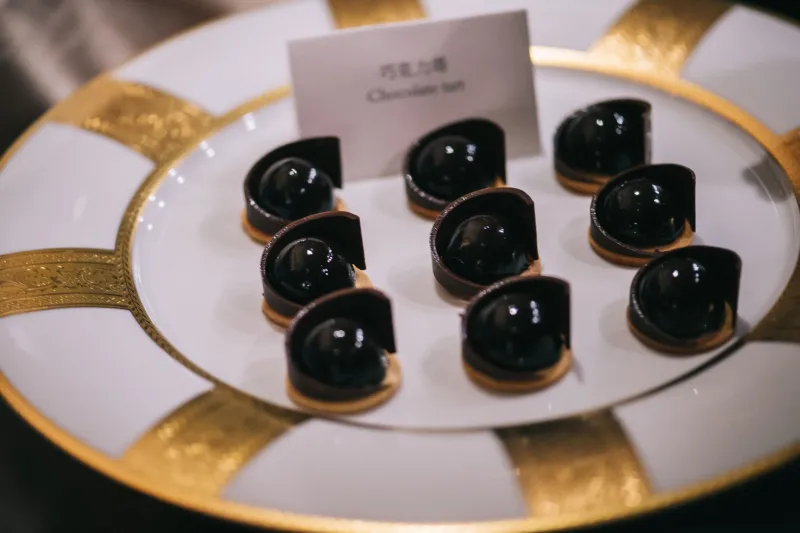
Consider a Dubai-inspired chocolate composition built around three movements: first, a shell of 72% cacao that registers with immediate authority; then, a pause as the chocolate yields to a center of aged rose water and raw honey, softer and more nostalgic in character; and finally, a barely-there whisper of oud resin that arrives only after the sweetness has fully receded, leaving something almost meditative in its wake.
Each of these stages requires time. Not the passive time of simply chewing, but the active time of paying attention — of noticing when one flavor ends and another begins, of sitting with the transition rather than rushing past it. The confection, in this sense, is less a product than a prompt.
American pastry professionals who have studied in Dubai or collaborated with Gulf-based studios describe this approach as transformative not only for the guest but for the maker. When you design for attention rather than for impact, the creative problem changes entirely. You are no longer asking how to impress. You are asking how to hold.
Why American Palates Are Ready
The timing of this movement's arrival in American dessert consciousness is not coincidental. Across the broader culture, there is a pronounced and well-documented hunger for experiences that slow the pace of modern life. Meditation applications have become mainstream wellness tools. The concept of the analog retreat — unplugged weekends, silent dinners, technology-free dining rooms — has migrated from the fringe to the aspirational center of American leisure culture.
Luxury confectionery, it turns out, is a surprisingly natural vehicle for this impulse. A beautifully constructed sweet, eaten with genuine attention, can function as a kind of secular mindfulness practice — brief, accessible, and deeply pleasurable in a way that a meditation cushion is not always able to claim.
American consumers who have encountered Dubai-inspired confections designed in this tradition frequently describe the experience in terms that go beyond taste. They speak of feeling present in a way they rarely do. Of noticing things — the temperature of a ganache, the texture of a dusted surface, the precise moment a flavor shifts — that they would ordinarily miss entirely.
Bringing the Practice Home
For American dessert lovers who wish to engage with this philosophy without boarding a flight to the Gulf, the principles are surprisingly portable. The key is not the ingredient list but the intention brought to the experience.
Begin by removing distraction. A dessert designed for deep attention deserves the same conditions one might create for music that demands listening rather than merely hearing — no screens, no ambient conversation, adequate light.
Choose confections with genuine complexity: a high-quality date truffle finished with fleur de sel, a saffron-infused panna cotta, a cardamom caramel whose sweetness takes time to fully resolve. These are not novelties. They are invitations.
And then, simply: wait. Allow each sensation to complete itself before reaching for the next bite. Notice what arrives in the silence between them.
A New Standard of Luxury
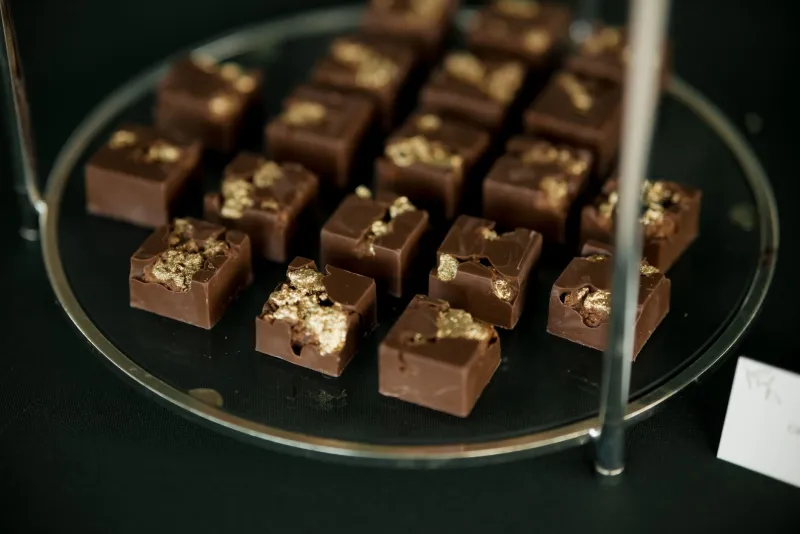
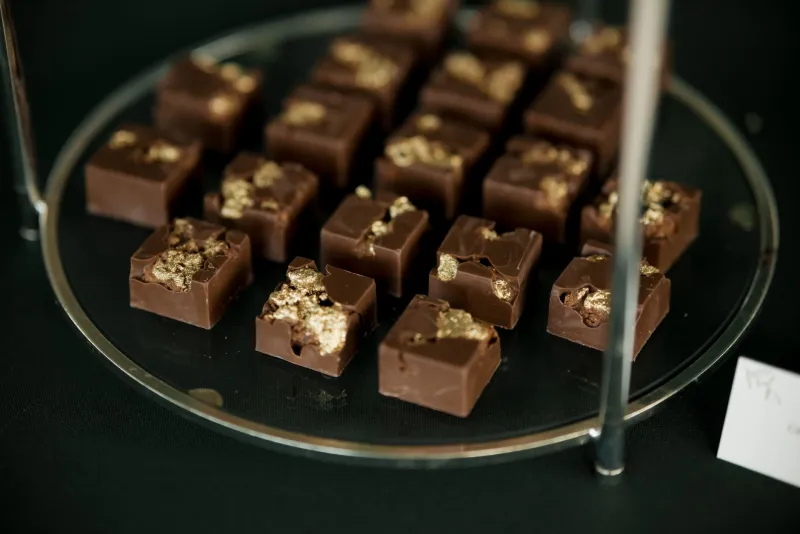
The confectioners of Dubai who are pioneering this approach are not, it should be said, abandoning beauty or opulence. The presentations remain extraordinary — edible gold leaf applied with the care of a restorer working on a Renaissance manuscript, surfaces polished to a mirror finish, components arranged with the spatial logic of a landscape architect.
What has changed is the ambition behind the beauty. These studios are no longer content to create something that looks remarkable. They are designing something that asks to be truly known.
In a culture that has optimized almost every experience for speed and efficiency, that ask is, in itself, a form of luxury — perhaps the most genuine form of all.