The Architecture of Absence: How Negative Space Became Dubai's Most Powerful Confectionery Statement
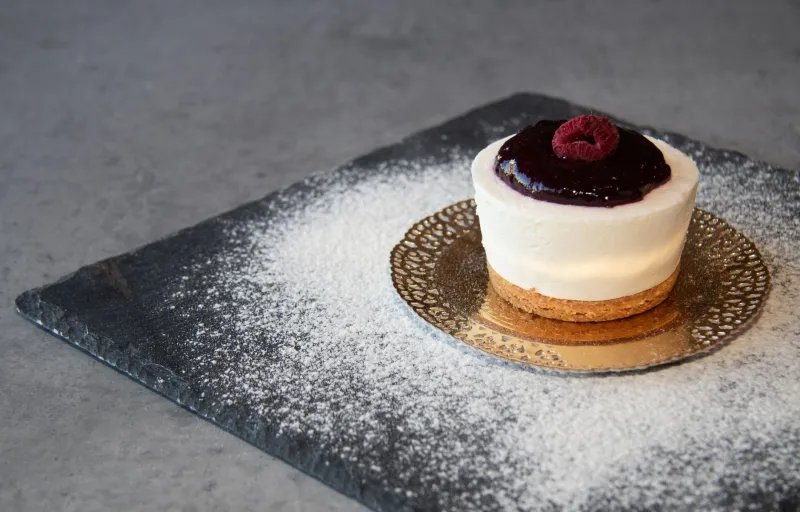
There is a particular kind of confidence required to leave a plate largely empty. In a culture that has long equated abundance with generosity and visual density with value, the deliberate choice to withhold decoration demands both authority and conviction. Yet in the most refined confectionery studios operating under Dubai's influence, this restraint has become the defining gesture of genuine luxury — a philosophy that is now reshaping how America's most sophisticated dessert kitchens think about composition, plating, and the very meaning of refinement.
The concept is deceptively simple: negative space, the unoccupied area surrounding a central element, is not wasted real estate. It is, in fact, the most carefully considered portion of the entire composition.
From Skyline to Sugar: The Architectural Origins of an Edible Philosophy
Dubai's relationship with negative space is, first and foremost, an architectural one. The city's most iconic structures — the soaring verticality of the Burj Khalifa, the geometric precision of the Museum of the Future, the deliberate voids cut into the façades of its most celebrated towers — all employ absence as an active design element. Emptiness in Dubai's built environment is never accidental. It is engineered to direct the eye, amplify proportion, and allow the central form to assert its full presence without competition.
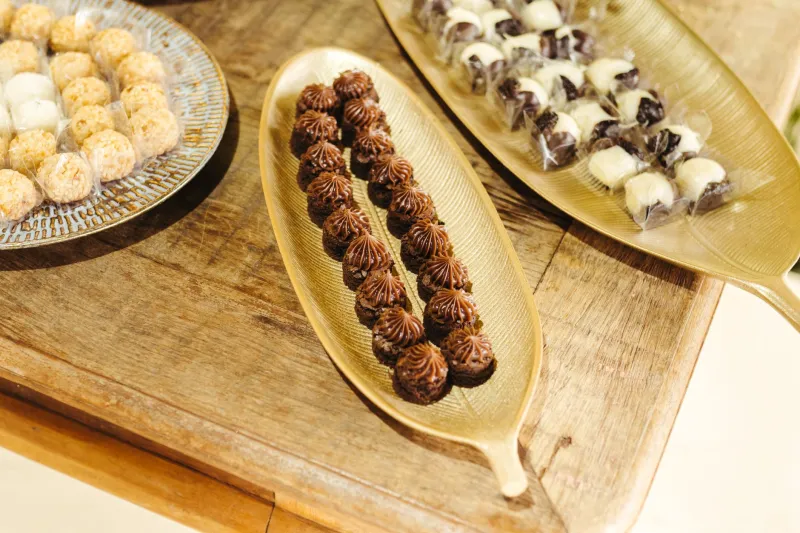
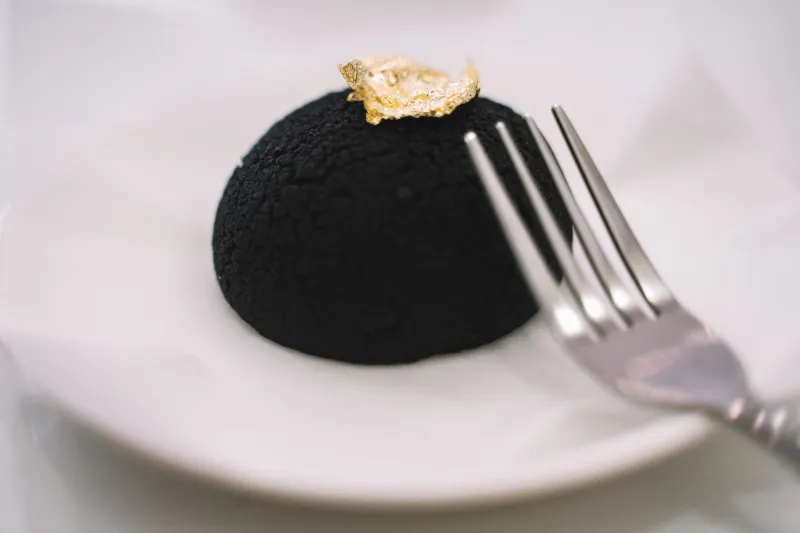
It was perhaps inevitable that this sensibility would migrate from steel and glass into sugar and chocolate. Dubai's confectionery artisans, many of whom trained alongside architects and interior designers in the emirate's extraordinarily cross-disciplinary creative culture, began applying spatial logic to their plating work with remarkable results. A single bonbon positioned at the lower third of a wide, matte-white plate. A solitary saffron-dusted madeleine resting on an expanse of unadorned slate. A sliver of date caramel, lacquered to a mirror finish, occupying perhaps fifteen percent of the surface it inhabits.
In each case, the surrounding emptiness does not diminish the confection. It amplifies it — in much the same way that silence between musical notes gives each sound its particular resonance.
What the Void Actually Communicates
For American diners accustomed to the visual language of abundance — the towering parfait, the generously garnished platter, the dessert whose every square inch announces its own presence — encountering a Dubai-influenced plate can feel, at first, almost disorienting. The instinct is to read spaciousness as scarcity.
But that reading inverts quickly, and the inversion is precisely the point.
Luxury, at its most sophisticated, has always been about the ability to choose less. The woman who wears a single, flawless piece of jewelry communicates something categorically different from one who wears many. The architect who designs a room around one extraordinary object rather than filling it with furniture is speaking a language of confidence and curation. Dubai's confectioners understand this grammar fluently, and the message they are sending — to those with the cultural literacy to receive it — is unambiguous: this single piece is extraordinary enough to stand alone.
Negative space, in this context, functions as a form of endorsement. The empty plate is the confectioner's declaration that what occupies the center requires no embellishment, no supporting cast, no visual noise to justify its place.
The Discipline Required to Subtract
What makes this philosophy genuinely demanding is that it offers no camouflage. When a plate is crowded with garnishes, sauces, micro-herbs, and decorative flourishes, imperfections in the central element can be absorbed, softened, or simply lost in the visual complexity. Negative space eliminates that possibility entirely.
A confection placed alone on an open field of porcelain must be perfect. Its temper must be flawless. Its geometry must be precise. Its surface — whether matte, glossy, or textured — must be entirely intentional. There is nowhere to hide, and Dubai's most accomplished studios would not have it any other way.
This is why the philosophy tends to emerge at the highest levels of the craft rather than at its entry points. It requires not only technical mastery but a particular kind of creative courage: the willingness to let a single element carry the full weight of the experience without assistance.
In American kitchens beginning to adopt this approach, that courage is increasingly evident. Pastry chefs at forward-thinking fine dining establishments from New York to Los Angeles are studying the spatial logic of Dubai-inspired plating with genuine seriousness, recognizing that the discipline of subtraction is, paradoxically, among the most rigorous skills in the contemporary dessert repertoire.
Layers, Intervals, and the Interior Negative Space
The philosophy extends beyond the plate itself and into the architecture of the confection's interior. Dubai's layered sweets — the intricate tarte constructions, the precisely engineered bonbons, the multi-component petit fours — often incorporate what might be called interior negative space: deliberate intervals between layers, unfilled pockets within a ganache, a pause in texture that the palate registers as an intentional breath rather than a structural gap.
This interior restraint mirrors the exterior plating philosophy. Just as the empty plate gives the eye room to settle and focus, the textural pause within a layered confection gives the palate a moment of suspension — a beat between flavor movements that makes the subsequent note land with greater force and clarity.
The most celebrated example of this in Dubai's confectionery tradition is the deliberate air pocket within a hand-rolled truffle: a microscopic void at the center that, when the shell yields to pressure, creates a sensation of unexpected lightness before the ganache asserts itself. The effect is subtle to the point of being almost subliminal, yet it transforms the experience of eating from passive consumption into something closer to active discovery.
American Luxury Relearning the Language of Space
The adoption of negative space as a confectionery value in the United States reflects a broader cultural shift in how luxury is being defined and communicated. As American consumers grow increasingly sophisticated — and increasingly skeptical of spectacle for its own sake — the quiet authority of a sparsely composed plate has begun to carry genuine aspirational weight.
High-end confectionery boutiques in cities like Chicago, San Francisco, and Miami are reimagining their presentation formats entirely, replacing elaborate multi-element arrangements with compositions that allow a single, exceptional piece to occupy its own atmosphere. The response from clientele has been telling: far from reading the restraint as underdelivering, customers consistently describe these presentations as feeling more considered, more personal, and more genuinely luxurious than anything they have encountered in more visually busy contexts.
Dubai understood this long before the American market arrived at the same conclusion. In the emirate's most prestigious confectionery houses, the empty space on the plate has never been an oversight. It has always been the most deliberate element in the composition — the silence that makes the music worth hearing.