A Taste of Elsewhere: The Science of Why Arabian Spice Memories Are Becoming America's Most Coveted Luxury Escape
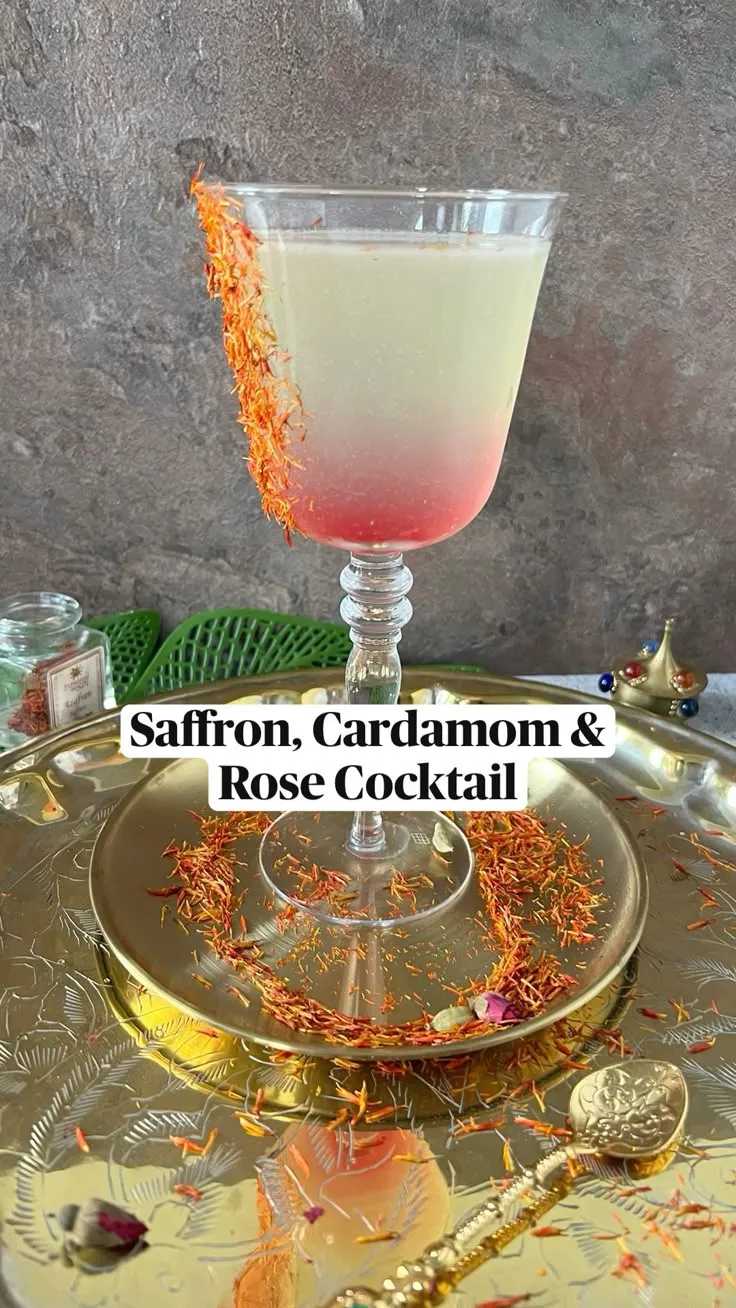
Photo: Arabian spices saffron cardamom rose water luxury dessert atmospheric moody, via i.pinimg.com
There is a particular kind of longing that a spice can produce — one that operates independently of lived experience, reaching past the rational mind to access something older and more instinctive. A single breath of cardamom warming in a copper pan. The faint, resinous drift of oud smoke through a candlelit room. The moment saffron releases its color into warm cream, perfuming the air with something simultaneously ancient and intimate.
For a growing number of American luxury consumers, these sensory signatures — drawn from the markets, majlises, and kitchens of Dubai and the broader Arabian Gulf — are not merely pleasant. They are, in a very precise neurological sense, transformative. And the luxury confectionery industry is beginning to understand exactly why.
What the Brain Does With a Spice
The relationship between olfaction, flavor, and memory is among the most well-documented phenomena in sensory neuroscience. Unlike visual or auditory information, scent and taste signals travel directly to the limbic system — the brain's emotional and memory center — without first being processed by the thalamus. The result is a neurological shortcut that allows certain flavors to trigger emotional responses of unusual intensity and specificity.
Dr. Rachel Herz, a cognitive neuroscientist who has written extensively on the psychology of smell, has described this pathway as producing what she calls "Proustian memories" — recollections triggered by sensory cues that feel more vivid and emotionally charged than those accessed through other means. What is particularly fascinating, and commercially significant, is that this effect does not require a prior personal encounter with the triggering scent or flavor. Cultural exposure — through literature, film, travel media, or even the descriptions of others — can create anticipatory neural associations that function, upon first tasting, as something startlingly close to memory.
This is the mechanism that luxury dessert brands working within the Dubai-inspired spice tradition are, whether consciously or not, activating in their American clientele.
The Architecture of a Flavor Memory
Consider what happens when an American consumer encounters, for the first time, a cardamom and rose water financier from a boutique confectionery house in Manhattan's Upper East Side. The cardamom — warm, slightly eucalyptine, with a floral complexity that Western palates associate vaguely with chai but cannot quite categorize — registers as simultaneously familiar and foreign. The rose water adds a dimension that is unmistakably perfumed, evoking something ceremonial, something offered with intention.
Together, these two elements construct what flavor psychologists sometimes call an "elsewhere experience" — a sensory environment that the mind cannot locate in its existing geography but recognizes, on some level, as significant. For the luxury consumer, who is by definition someone with access to a wide range of sensory experiences and a corresponding appetite for distinction, this quality of productive disorientation is itself a form of pleasure.
"There is a reason people describe certain flavor combinations as 'taking them somewhere,'" notes one Los Angeles–based pastry chef whose confectionery program draws heavily on Gulf spice traditions. "When someone says a dessert transported them, they are describing something neurologically real. The spice combination has created a kind of mental travel — and for many of my clients, that is precisely what they are seeking when they spend significantly on a confection."
Dubai as Sensory Destination
Dubai occupies a singular position in the American cultural imagination. As a city, it functions simultaneously as a real place and as a kind of aspirational abstraction — a byword for a particular quality of experience that is cosmopolitan yet rooted, modern yet ancient, extravagant yet governed by genuine tradition. For many Americans who have visited, the sensory memories of the city's spice souks, its hotel lobbies perfumed with oud, and its dessert counters laden with saffron-threaded sweets are among the most vivid and durable of any travel experience.
For those who have not visited, the cultural currency of Dubai is nonetheless substantial. The city's aesthetic has permeated American luxury media, social platforms, and hospitality culture with sufficient depth that its sensory signatures — the spices, the florals, the warm bitterness of Arabic coffee paired with the dense sweetness of a stuffed date — carry genuine resonance even for those encountering them for the first time through a confection.
Luxury dessert brands are increasingly strategic about exploiting this resonance. The storytelling that accompanies a saffron and pistachio tart or a date and tahini bonbon is rarely incidental. It is, rather, a carefully constructed invitation to inhabit a specific imaginary geography — one in which the consumer's own emotional associations, however constructed, are honored and amplified.
Comfort, Complexity, and the Ultra-Luxury Palate
The concept of comfort food has traditionally implied simplicity — the mac and cheese, the warm cookie, the bowl of soup that recalls childhood and safety. What is distinctive about the current luxury spice-memory phenomenon is that it locates comfort in complexity. The ultra-wealthy American consumer is not seeking the unchallenging; they have access to that in abundance. What they seek, and are increasingly willing to pay significantly to obtain, is a comfort that requires something of them — an emotional and intellectual engagement that rewards attention.
Dubai-inspired spice combinations deliver precisely this. Cardamom is not a flavor that reveals itself immediately; it unfolds across the palate in stages, each note — the floral, the camphor, the warmth — arriving in sequence. Saffron's bitterness requires the mind to negotiate with its sweetness. Oud, when incorporated into confectionery, introduces a dimension that is simultaneously unsettling and deeply compelling, demanding a kind of recalibration of expectation.
This complexity is, paradoxically, what makes these flavors feel intimate. The effort of attention required to fully receive them creates a sense of personal encounter — the feeling that this particular dessert was made for someone capable of appreciating it. For the luxury consumer, that sense of being specifically understood is among the most valued experiences money can provide.
Crafting the Memory Forward
What the most sophisticated luxury confectionery brands are now doing is not merely referencing Dubai's spice tradition but actively constructing new flavor memories — experiences designed to be recalled with the same vividness and emotional charge as a lived encounter. This is, in essence, a form of experiential architecture: using the neuroscience of flavor memory to create something that functions, in the consumer's inner life, as a place they have genuinely been.
In a cultural moment defined by overstimulation, algorithmic sameness, and the increasing difficulty of genuine novelty, this capacity to generate a private, emotionally resonant elsewhere may be the most valuable thing a luxury confection can offer. Dubai's spice traditions, arriving in American dessert culture at precisely this moment, carry within them the raw material for exactly this kind of alchemy — and the most thoughtful practitioners of the craft are only beginning to explore what is possible.