Smoke, Resin, and Revelation: The Audacious Rise of Oud in America's Most Ambitious Dessert Kitchens
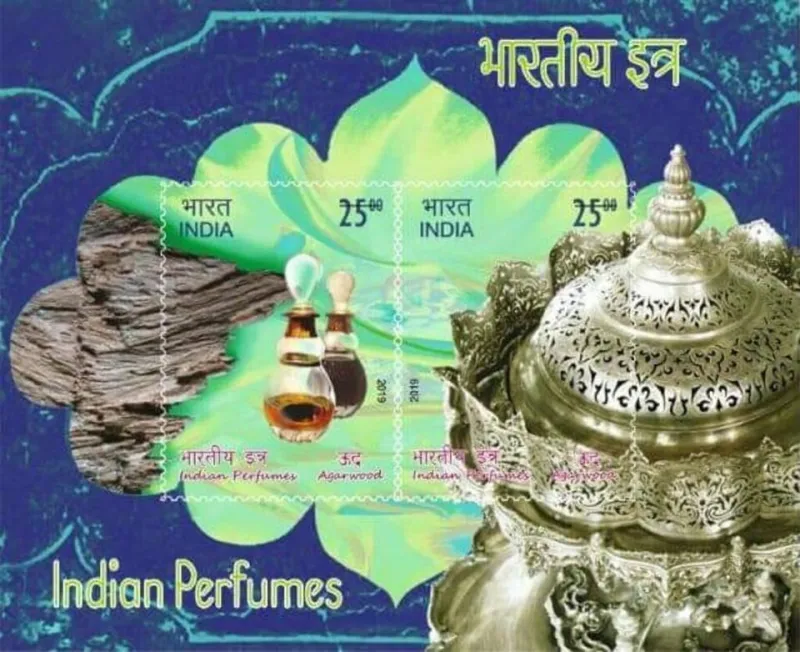
Photo: Post of India, GODL-India, via Wikimedia Commons
Ask any perfumer in the world to name the most coveted raw material in their craft, and the answer will almost certainly involve oud. Derived from the resin-saturated heartwood of the Aquilaria tree — a transformation that occurs only when the tree mounts a biological defense against a specific fungal infection — oud has commanded extraordinary prices for centuries across the Middle East, South Asia, and East Asia. In Dubai, where the burning of oud chips in ornate incense burners is a gesture of hospitality so fundamental it borders on the sacred, the fragrance is inseparable from the culture's deepest expressions of welcome, prestige, and identity.
What was not, until very recently, part of oud's story was dessert. And yet here we are.
An Ingredient That Refuses Easy Description
Before exploring how oud functions in a culinary context, it is worth attempting to describe what it actually tastes and smells like — a task that humbles even the most experienced sensory professionals. Oud is not a single flavor profile. It is a spectrum. At its most approachable, it presents as a warm, woody depth with leather-adjacent undertones and a sweetness that is almost animalic in its richness. At its most challenging, it can read as medicinal, barnyard, or sharply resinous in ways that startle the uninitiated. The variance between individual oud sources — by geographic origin, tree age, and extraction method — is as dramatic as the difference between a delicate Burgundy and a heavily tannic Barolo.
This complexity is precisely what makes oud so compelling to the most intellectually ambitious pastry chefs working in America today. In a culinary landscape where novelty for its own sake has grown weary, oud offers something genuinely different: a flavor with cultural weight, historical depth, and a technical challenge substantial enough to occupy serious professional attention for months.
The Culinary Case for Oud
The technical pathway for introducing oud into dessert preparations depends significantly on the form in which the ingredient is sourced. Culinary-grade oud essential oil — now available through a small number of specialty importers serving the professional food industry — allows for precise dosing in ganaches, custards, and caramel bases. The concentration required is vanishingly small; a single drop per kilogram of base preparation is frequently sufficient to register the ingredient's presence without overwhelming the composition. This is not hyperbole. Oud's aromatic potency is such that overuse does not merely unbalance a recipe — it renders it inedible.
Some chefs working in the smoke-forward tradition of contemporary American cuisine have experimented with infusing cream or milk with actual oud wood chips, treating the process much as one might approach a cold-smoke infusion for cocktails. The results, by all accounts, are extraordinary in their authenticity — the resinous, almost incense-like quality that emerges from a slow, cold infusion of oud wood into heavy cream carries a genuinely transportive quality that oil-based preparations approach but rarely match. The tradeoff is consistency: natural oud wood varies enormously in its aromatic intensity, making standardized recipe development a significant challenge.
The Flavor Partnerships That Work
Chocolate is, by wide consensus among the practitioners who have explored this territory most thoroughly, oud's most natural culinary companion. The roasted, slightly bitter character of a high-percentage dark chocolate provides structural counterbalance to oud's sweetness, while the fat content of a well-made ganache serves as an effective carrier for the ingredient's volatile aromatic compounds. The result, when calibrated correctly, is a truffle or bonbon that opens with the familiar pleasure of fine chocolate and closes with something altogether more mysterious — a warm, resinous finish that lingers in a manner entirely unlike any conventional flavoring.
Caramel presents a different but equally rewarding partnership. The Maillard-driven complexity of a properly executed dark caramel — its notes of toffee, bitter orange, and toasted sugar — shares a tonal register with oud's deeper characteristics, creating a harmony that feels intuitive rather than forced. Several American confectioners have introduced oud caramel as a filling in luxury chocolate collections, positioning it explicitly within a Dubai-inspired narrative that resonates with consumers who have encountered oud in a fragrance context and are curious about its culinary translation.
Vanilla-forward preparations — panna cottas, custards, and certain cream-based fillings — offer a more delicate canvas. Here, the contrast between oud's assertive character and vanilla's soft, floral warmth creates a tension that is either beguiling or destabilizing, depending on the skill with which the balance is struck.
Who Is Doing This, and Where
The geography of oud's culinary adoption in the United States follows a predictable but instructive pattern. New York and Los Angeles remain the primary centers of activity, with Chicago and Miami emerging as secondary hubs where significant Middle Eastern and South Asian diaspora communities have both the cultural familiarity with oud and the spending power to support premium confectionery positioned around it. In several New York establishments with Michelin recognition, oud has appeared on tasting menus as a finishing element in petit fours — a deliberate choice to end the meal with a fragrance-adjacent experience that blurs the boundary between eating and scent memory.
Independent confectioners — many of them operating through direct-to-consumer e-commerce channels that allow for the kind of storytelling these culturally specific ingredients demand — have been, in many respects, quicker to adopt oud than their institutional counterparts. Without the conservative palate assumptions that large restaurant groups must navigate, small-batch chocolatiers have introduced oud as a hero ingredient in limited-edition collections that sell out rapidly, suggesting a consumer appetite more adventurous than the mainstream market typically credits.
Balancing Reverence with Creativity
For any pastry professional or serious home confectioner approaching oud as a culinary ingredient, a degree of cultural attentiveness is warranted alongside the technical preparation. In Dubai and across the Gulf, oud is not a novelty — it is a living tradition, a language of hospitality and spiritual significance that predates the modern luxury economy by many centuries. Engaging with it as a culinary ingredient carries an implicit responsibility to understand and honor that context, rather than reducing it to mere exoticism.
The most compelling oud desserts being produced in American kitchens today are precisely those that reflect this understanding — preparations in which the ingredient's heritage is treated as a source of genuine inspiration rather than atmospheric decoration. When oud is introduced into a chocolate bonbon with the same intentionality that a Khaleeji host brings to lighting incense before receiving a guest, the dessert becomes something more than technically accomplished. It becomes, in the truest sense of the phrase that has always defined this brand's ambitions, a luxury worth experiencing.