Refused, Waitlisted, and Still Wanting: How Dubai's Rarest Confectioners Made Rejection the New Prestige
There is a particular kind of status that money alone cannot purchase. It arrives not in the form of a confirmation email or a velvet-lined delivery box, but in the quiet, almost clinical language of a politely worded decline. In Dubai's most rarefied confectionery circles, this is not an anomaly. It is, increasingly, the point.
A growing number of the emirate's ultra-luxury dessert makers have adopted what observers are calling a deliberate scarcity model — one in which limiting output, refusing commissions, and maintaining years-long waiting lists is not a symptom of operational constraint, but a carefully considered philosophical stance. For American collectors and dessert connoisseurs who have begun engaging with these studios, the experience of being turned away has become something altogether unexpected: a mark of distinction.
The Economics of Intentional Limitation
To understand why any business would voluntarily forfeit revenue, it helps to consider what Dubai's finest confectioners are actually selling. The product is rarely, if ever, simply the sweet itself. What changes hands in these transactions — when they happen at all — is provenance, singularity, and the assurance that what one holds has been touched by an extraordinarily small number of hands.
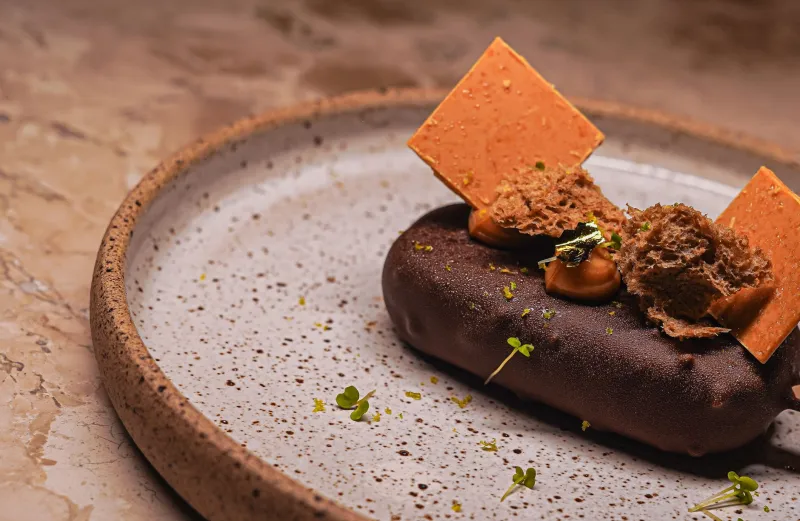
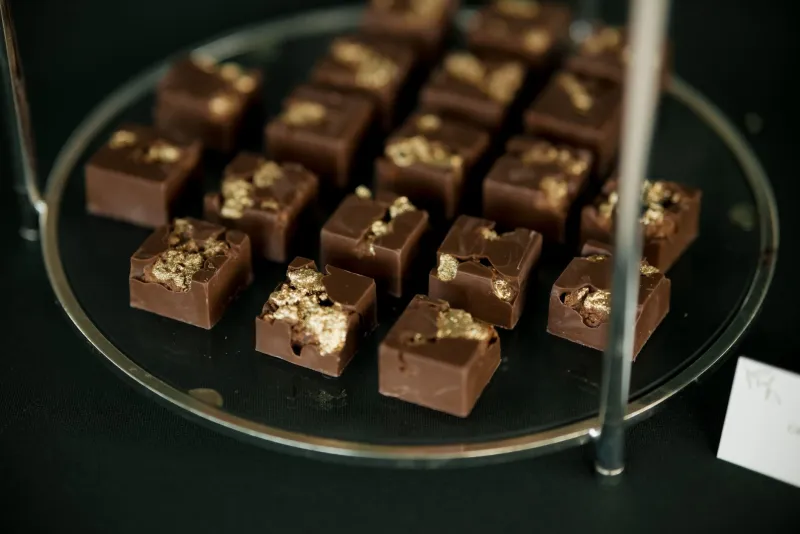
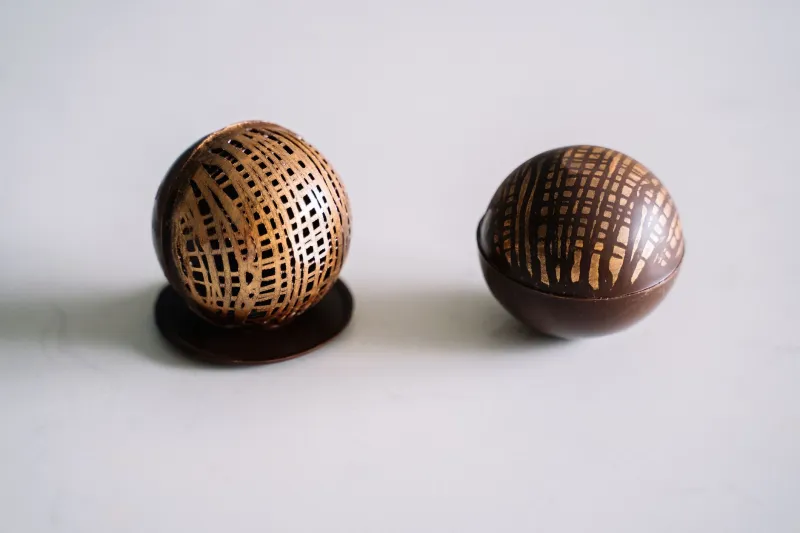
Several of Dubai's most respected studios operate on annual production caps that would astonish American entrepreneurs conditioned by growth-at-all-costs business culture. One atelier, known for its single-origin date confections layered with aged balsamic and hand-harvested saffron, reportedly fulfills fewer than two hundred individual commissions per year. Another, celebrated for its sculptural chocolate work incorporating genuine 24-karat gold leaf sourced from a single Emirati supplier, has maintained a standing waitlist since well before the pandemic — and has shown no interest in clearing it through expansion.
The reasoning, as articulated by those rare makers willing to discuss it, is straightforward in principle if counterintuitive in practice. When production scales, attention divides. When attention divides, the work changes. And when the work changes, the singular quality that justified the price — and the waiting — quietly disappears.
What American Collectors Are Learning to Read Between the Lines
In the United States, where luxury is most legibly expressed through acquisition — the purchase made, the item possessed, the experience consumed — the concept of a prestigious rejection requires a meaningful cultural adjustment. American consumers are accustomed to the idea that sufficient wealth grants access. Dubai's most exclusive confectioners are gently, persistently suggesting otherwise.
What has emerged, particularly among the American clientele who follow these studios through private networks and invitation-only tasting events held in cities like New York, Miami, and Los Angeles, is a sophisticated new literacy around refusal. Being declined by a studio of sufficient reputation has begun to function as social proof of a different order: evidence that one was discerning enough to seek out the right maker, and serious enough to be considered at all.
This is not entirely without precedent in American luxury culture. The years-long wait for a Hermès Birkin bag, the allocation lists at prestigious Napa Valley wineries, the membership structures of certain private dining clubs — all share the same underlying architecture. What Dubai's confectioners have done is import this logic into a domain where it has rarely been applied with such rigor: the single-serving dessert.
The Psychology of the Withheld
Behavioral economists have long documented the relationship between scarcity and perceived value. What Dubai's deliberate limitation strategy introduces, however, is something subtler than simple supply restriction. It is the active, visible exercise of discretion by the maker — the public knowledge that the studio could accept more orders, and has chosen not to.
This distinction matters enormously to the psychology of the would-be patron. A sold-out product frustrates. A deliberately withheld one fascinates. The former suggests that demand outpaced supply; the latter implies that the maker has standards that supersede commercial appetite. For a certain class of American luxury consumer — one who has grown weary of products marketed as exclusive while remaining broadly available — this represents a genuinely novel encounter with restraint.
Several American patrons who spoke with Sweet Dubai described the experience of being waitlisted by a Dubai confectionery studio in terms more commonly associated with artistic patronage than retail commerce. The waiting, they suggested, was itself a form of engagement — a sustained relationship with an object not yet received, a prolonged anticipation that colored the eventual tasting with something no amount of expedited shipping could replicate.
When the Refusal Travels
Perhaps the most revealing aspect of this phenomenon is what happens after the decline. Rather than seeking an alternative, many American patrons have reported that a refusal from a sufficiently prestigious Dubai studio deepens rather than diminishes their interest. They speak of the maker to others. They follow the studio's rare public communications with heightened attention. They wait.
In this sense, the refusal functions as a form of brand communication more potent than any advertisement. It signals, without stating, that the work produced within those walls operates by a different set of priorities — and that the maker's commitment to those priorities is absolute. For an American luxury market that has grown increasingly skeptical of curated scarcity as a marketing tactic, this absolutism reads as authenticity.
The studios that have most successfully cultivated this dynamic share a common characteristic: they have never publicly announced their limitation as a strategy. The scarcity is known through experience and word of mouth, not press releases. The refusals arrive without fanfare. The waiting lists are not advertised. This discretion is itself part of the message.
What This Means for the American Dessert Imagination
For those shaping the future of luxury confectionery in the United States, the Dubai model offers a genuinely disruptive proposition. In a domestic market where artisan producers are frequently advised to scale in order to survive, the counterexample of studios that have built their entire reputation on the refusal to do so is instructive — and, for the right audience, deeply appealing.
A small but growing cohort of American confectioners has begun experimenting with analogous approaches: strict annual commissions, invitation-only client relationships, the deliberate absence of e-commerce infrastructure. Whether the American market will fully embrace the cultural logic that makes these structures meaningful — the understanding that the refusal is not an obstacle but an offering — remains to be seen.
What Dubai has demonstrated, with characteristic assurance, is that patience is not merely a virtue in the finest confectionery. It is, at the appropriate level of craft and intention, the product itself. And for those willing to wait — or to be told, with great courtesy, that they may not yet — that patience carries a flavor no recipe can fully capture.